
Choosing the Right Postgraduate Program in Cyprus: A Guide for Pakistani Students

Introduction In recent years, Cyprus has emerged as a rising hub for international education, attracting students from all over the world with its high academic standards, affordable living, and welcoming environment. Known for its blend of European quality education and Mediterranean lifestyle, Cyprus offers a unique study experience that balances academic growth with cultural enrichment. For Pakistani students seeking postgraduate opportunities abroad, Cyprus is gaining popularity as a smart and practical choice. The availability of English-taught programs, relatively lower tuition fees compared to Western Europe, and a safe, student-friendly atmosphere make it an ideal destination for those aiming to pursue higher studies without breaking the bank. This guide aims to help Pakistani students make informed decisions by exploring the key factors involved in choosing the right postgraduate program in Cyprus. From selecting a field of study to understanding admission requirements, tuition fees, and campus life, this blog will provide a step-by-step roadmap to plan your academic future with confidence. Why Study in Cyprus? Cyprus has steadily built a strong reputation as a desirable destination for international students, and for good reason. Here are some of the key factors that make it an attractive choice for Pakistani students pursuing postgraduate studies: 1. Quality of Education and International Recognition Cyprus is home to several universities that offer high-quality education aligned with European standards. Many institutions are accredited and recognized globally, with strong academic frameworks and industry-relevant curricula. Some universities also have partnerships with UK, US, and EU institutions, adding value to the degree you earn. 2. Affordable Tuition and Living Costs Compared to countries like the UK, Australia, or Canada, Cyprus offers more affordable tuition fees and lower living expenses, making it a budget-friendly option for many Pakistani families. On average, tuition fees for postgraduate programs range between €5,000 to €12,000 per year, depending on the university and course. 3. English-Taught Programs The whole curriculum of postgraduate studies at Cyprus institutions operates in English. Pakistani students benefit significantly from this setup because their foreign language barrier is resolved, and they can rapidly adjust to university studies while their English language skills advance. 4. Safe and Multicultural Environment The European population recognizes Cyprus as a secure country with consistently low criminal activities and an open-hearted reception for residents and visitors. International students and those from Pakistan can create a sense of familiarity through the diverse student body. Universities provide active support services to students that organize events and cultural activities through different clubs, which help students settle into university life naturally. Popular Fields of Study for Pakistani Students When considering postgraduate studies in Cyprus, many Pakistani students gravitate toward fields that offer strong career prospects, international relevance, and academic excellence. Below are some of the most popular and in-demand areas of study: 1. Business and Management Programs in business administration, finance, marketing, and management are among the top choices. Cyprus offers MBA and specialized business master’s degrees that focus on global business trends, entrepreneurship, and leadership—ideal for students aiming to enter the corporate or startup world. 2. Computer Science and IT With the global tech industry booming, Computer Science and IT remain highly sought-after. Courses in software engineering, data science, cybersecurity, and artificial intelligence prepare graduates for cutting-edge roles both in Europe and internationally. 3. Engineering Engineering programs, particularly in civil, mechanical, electrical, and environmental engineering, are well-developed in Cypriot universities. These programs emphasize practical knowledge, research, and innovation, offering Pakistani students a competitive edge in technical fields. 4. Tourism and Hospitality Given Cyprus’s thriving tourism industry, it’s no surprise that postgraduate degrees in tourism, hospitality, and event management are robust and hands-on. These programs offer unique opportunities for internships and real-world exposure, perfect for those looking to build a career in international hospitality. 5. Health and Life Sciences The academic disciplines of public health, biomedical sciences, and healthcare management are in rising demand among Pakistani students. The curricula of these programs integrate theoretical education with practical research while providing students with either healthcare system employment opportunities or preparation for PhD programs.
Australia’s Student Visa Changes: Labor Party Confirms Fee Increase

Introduction Australia has long been a preferred destination for international students, offering world-class education, diverse cultural experiences, and promising post-graduation opportunities. In 2024 alone, over one million international students were enrolled in Australian institutions, contributing significantly to the nation’s economy. However, recent developments have introduced changes to the student visa policies. The ruling Labor Party has announced plans to increase the international student visa fee from A$1,600 to A$2,000, aiming to regulate the growing education sector and manage net migration. This move is part of a broader strategy to address housing pressures and ensure the sustainability of Australia’s immigration system. This blog aims to provide a comprehensive overview of these recent changes, delve into the political context, and explore the potential implications for prospective international students considering Australia as their study destination. Background: Australia’s International Education Landscape Significance of International Students to Australia’s Economy International education stands as a cornerstone of Australia’s economy. In the 2023–24 financial year, the sector contributed approximately A$50.5 billion, encompassing tuition fees, accommodation, living expenses, and other services. This positions international education as Australia’s fourth-largest export industry, following iron ore, coal, and natural gas. International education plays a vital role in advancing Australia’s social power as it attracts international students who are beyond economic value. Australia gains international respect through its environment, which combines international students with cultural sharing and international diplomacy. Previous Student Visa Fee Structures Historically, Australia’s student visa fees were relatively moderate. However, on 1 July 2024, the Australian government implemented a significant increase, raising the student visa application fee from A$710 to A$1,600. This adjustment aimed to reflect the growing value of education in Australia and to fund initiatives in education and migration. Recent Trends in International Student Enrollments International student enrollments keep rising in Australia each year. The most extensive recorded enrollment of student visa holders reached 608,262 on June 30, 2024. International students have gained massive prominence in the Australian educational sector and economic landscape. The recent changes to visa fees together with policy modifications have created doubts among various stakeholders. The increased tuition fees make educational institutions apprehensive about student enrollment because potential students may be discouraged from studying. The Announced Fee Increase Details of the Proposed Fee Hike from A$1,600 to A$2,000 In April 2025, Australia’s ruling Labor Party announced plans to raise the international student visa application fee from A$1,600 to A$2,000 if re-elected. This follows a significant increase in July 2024, when the fee more than doubled from A$710 to A$1,600. The proposed increase to A$2,000 is part of Labor’s pre-election strategy and would be implemented upon their re-election. The previous increase to A$1,600 took effect on July 1, 2024 . Comparison with Previous Fee Increases These increases position Australia’s student visa fees as some of the highest globally, surpassing those of the U.S. (approximately $185) and Canada (approximately C$150) . Government’s Rationale Behind the Increase The Labor government justifies the fee hikes as measures to: Additionally, the government aims to regulate the growing education sector and manage net migration, addressing concerns about housing pressures and ensuring the sustainability of Australia’s immigration system . Political Context and Opposition Stance Labor Party’s Position and Justifications The Australian Labor Party has announced plans to increase international student visa fees from A$1,600 to A$2,000 if re-elected. This policy aims to generate approximately A$760 million over four years, contributing to budget improvements and funding initiatives such as additional bulk-billed GP visits and mental health services. Labor justifies the fee hike as a measure to reflect the value of Australian education and to manage the growing international education sector. The party also plans to cap new international student enrollments at 270,000 in 2025 to address housing pressures and ensure the sustainability of Australia’s immigration system. Opposition’s Proposed Fee Increases and Policies The opposition Coalition has proposed more substantial changes, including increasing student visa fees to a minimum of A$2,500, with fees reaching up to A$5,000 for top-tier universities. Additionally, they plan to cap new international student arrivals at 240,000 per year. The Coalition argues that these measures will alleviate housing pressures and ensure that international students are genuine and committed to their studies. They also propose increasing international students’ work allowance from 45 to 60 hours per fortnight, aiming to generate additional tax revenue. Debates Surrounding the Impact on International Education These proposed changes have sparked debates among stakeholders in the education sector. Universities Australia and other education providers express concern that higher visa fees and stricter caps on student numbers could deter prospective international students, potentially impacting enrollment numbers and the broader economy. Critics argue that the fee increases make Australia a less attractive destination for international students, especially when compared to countries like the U.S. and Canada, where visa fees are significantly lower. There are also concerns that increasing work allowances may shift the focus from education to employment, undermining the quality of education and the integrity of the student visa program.
How to Apply for a Finland Study Visa from Pakistan: A Step-by-Step Guide

Introduction Finland has emerged as an attractive destination for Pakistani students seeking high-quality education, a safe environment, and innovative learning opportunities. With a wide range of English-taught programs and a strong focus on research and technology, Finland offers a pathway to a bright academic and professional future. However, successfully starting your educational journey in Finland requires a clear understanding of the student visa process. Knowing the requirements, steps, and common pitfalls can make the difference between a smooth application and unnecessary delays or rejections. In this blog, we will guide you through the complete process of applying for a Finland study visa from Pakistan. From securing admission to submitting your visa application and preparing for your move, this step-by-step guide is designed to make the journey easier and more manageable for you. Why Choose Finland for Higher Education? Choosing Finland for your higher education can open doors to world-class academic opportunities and a bright future. Here are some key reasons why many Pakistani students are opting for Finland: High-quality education system: Finland is renowned for its excellent education standards, modern teaching methods, and strong emphasis on research and innovation. English-taught programs: A wide variety of bachelor’s and master’s degree programs are offered in English, making it easier for international students to find courses that match their career goals. Safe, innovative, and student-friendly environment: Finland is one of the safest countries in the world, offering a welcoming environment, cutting-edge facilities, and a strong support system for students. Post-graduation work opportunities: After completing their studies, international graduates have opportunities to stay in Finland to seek employment and build their careers under the post-study work visa policy.
Study Abroad in New Zealand: Visa Process for International Students

Introduction New Zealand has become a top choice for international students seeking a world-class education in a stunning, peaceful environment. With its globally recognized universities, diverse culture, and high quality of life, it’s no surprise that thousands of students from around the world choose to study there each year. Student visa procedures require students to develop a critical understanding before beginning academic studies. Application difficulties affect new students because overseas education represents their initial international study experience. Students must understand visa eligibility standards and document correct compilation for approval success in their visa applications. In this blog, we’ll walk you through the complete visa process for international students planning to study in New Zealand. You’ll learn about the types of visas available, how to apply, what documents you need, and tips to avoid common mistakes. Whether you’re planning your undergraduate degree, a master’s program, or a short-term course, this guide will help you get started with confidence. Why Choose New Zealand for Higher Education? New Zealand offers a unique combination of academic excellence, cultural diversity, and natural beauty, making it an ideal destination for international students. World-class universities and programs: New Zealand’s universities consistently rank among the best globally, offering a wide range of programs that emphasize research, innovation, and practical learning. Safe and welcoming environment: Known for its friendly locals and low crime rates, New Zealand provides a secure and supportive atmosphere for students from all over the world. Post-study work opportunities: International graduates can benefit from generous post-study work visa options, allowing them to gain valuable work experience and explore career paths in New Zealand after graduation. Beautiful landscapes and vibrant culture: From scenic coastlines to majestic mountains, New Zealand offers breathtaking landscapes and a rich cultural experience that enhances life beyond the classroom. Types of Student Visas in New Zealand New Zealand offers different types of student visas to cater to the varying needs of international students and their families. Understanding which visa suits your situation is an important first step in the application process. Fee-paying student visa: This is the most common type of student visa, allowing you to study full-time at a New Zealand education provider and work part-time during your studies. Pathway student visa: This visa allows you to study up to three consecutive programs on a single visa, making it easier for students who plan to transition between courses or levels of study. Exchange student visa: If you are part of an approved student exchange program, this visa enables you to study in New Zealand for the duration of your exchange without paying tuition fees. Dependent visa (for family members): Immediate family members, such as partners or children of student visa holders, may apply for a dependent visa to accompany the student during their stay in New Zealand.
New Zealand Study Expenses: What International Students Need to Know
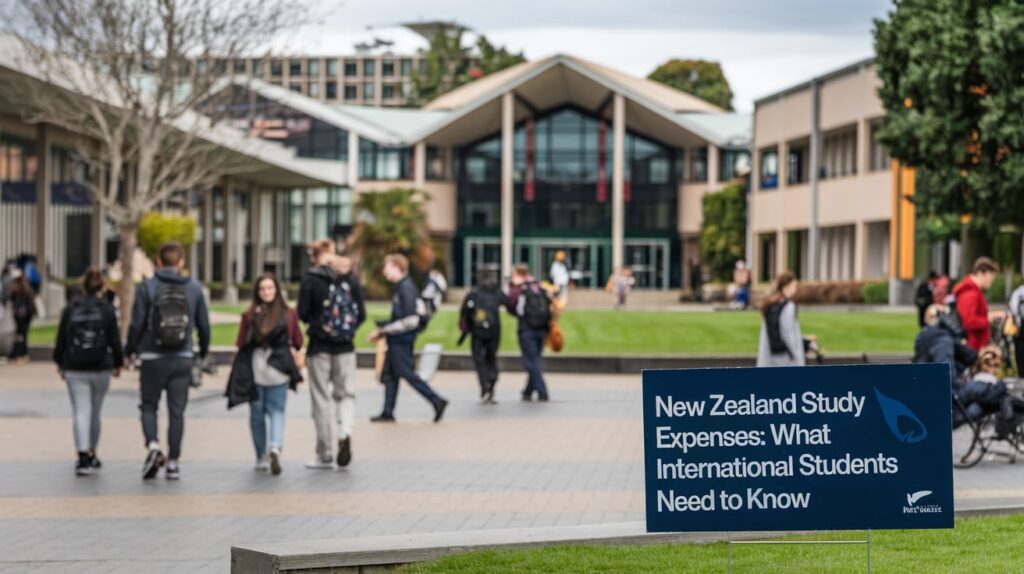
Introduction Overview: New Zealand has steadily emerged as a top study destination for international students, thanks to its world-class education system, safe and welcoming environment, and breathtaking natural beauty. From modern cities like Auckland and Wellington to the scenic landscapes of Queenstown and Rotorua, the country offers an enriching academic and cultural experience. Purpose: While the idea of studying in New Zealand is exciting, it’s essential for prospective international students to understand the financial commitments involved. This guide provides a comprehensive breakdown of the study-related expenses—from tuition fees to living costs—to help you plan your academic journey with confidence. Tuition Fees for International Students General Overview: Tuition fees vary based on the institution, program, and level of study. Study with New Zealand Masters Portal Massey University Undergraduate Programs: Bachelor of Arts: Approximately NZ$38,310 to NZ$45,841 per year. The University of Auckland Bachelor of Engineering (Honours): Around NZ$55,247 per year. The University of Auckland Postgraduate Programs: Master’s degrees: Tuition ranges from NZ$56,220 to NZ$70,120, depending on the course and research components. Massey University Doctoral Degrees: PhD programs: Fees typically range between NZ$21,820 to NZ$37,580. Massey University Special Programs: Southern Institute of Technology: Offers a “Zero Fees” scheme for certain programs, allowing students to save between NZ$7,000 to NZ$14,000 on bachelor’s degrees. Cost of Living in New Zealand Accommodation: University Halls of Residence: NZ$200–NZ$400 per week. Private Rentals: NZ$180–NZ$350 per week, depending on location and amenities. Food and Groceries: Monthly expenses range from NZ$300 to NZ$600. Transportation: Public transport passes cost approximately NZ$100–NZ$150 per month. Utilities and Internet: Combined monthly costs are around NZ$150–NZ$200. Personal Expenses: Entertainment, clothing, and miscellaneous expenses may total NZ$200–NZ$400 monthly.
Cost of Studying Dentistry in Cyprus: Tuition Fees and Living Expenses

Introduction Cyprus has emerged as a popular destination for students seeking a high-quality dentistry education in Cyprus in a vibrant Mediterranean setting. With internationally recognized programs, modern facilities, and experienced faculty, the country offers an excellent learning environment that prepares graduates for successful careers in dentistry. However, understanding the financial aspects of studying in Cyprus is crucial for prospective students. From tuition fees for dentistry in Cyprus to accommodation, daily living expenses, and additional costs like books and health insurance, proper financial planning is essential. This guide provides a detailed breakdown of the costs associated with studying dentistry in Cyprus, helping students make informed decisions about their education and budget. Tuition Fees for Dentistry Programs in Cyprus Pursuing a dentistry degree in Cyprus offers students access to high-quality education with modern facilities and internationally recognized qualifications. However, tuition fees can vary depending on the university, program structure, and additional academic benefits. Below is a breakdown of the tuition costs at some of the leading institutions offering dentistry programs in Cyprus. European University Cyprus (EUC) One of the top choices for dentistry students in Cyprus, European University Cyprus (EUC) offers a 5-year Bachelor of Dental Surgery (BDS) program designed to meet international academic and clinical standards. With cutting-edge laboratories, clinical training, and a strong emphasis on research, EUC provides students with a solid foundation for their careers. Cyprus International University (CIU) Another reputable institution, Cyprus International University (CIU), provides a well-structured dentistry program focusing on both theoretical knowledge and practical skills. The university is known for its modern dental clinics, advanced research facilities, and experienced faculty members. Other Institutions Offering Dentistry in Cyprus Apart from EUC and CIU, several other universities in Cyprus offer dentistry programs with tuition fees ranging between €10,000 and €22,000 per year. These institutions provide comprehensive training, clinical exposure, and internship opportunities to help students excel in their field. While tuition fees represent a significant portion of the overall cost, students should also consider additional expenses such as registration fees, lab charges, and dental instruments, which may vary by university. Prospective students are encouraged to check individual university websites for the latest fee structures and scholarship opportunities. By choosing to study dentistry in Cyprus, students can benefit from high academic standards, a multicultural learning environment, and opportunities for future career growth within Europe and beyond.
University of Kent’s Rising Rankings: A Top Choice for Pakistani Scholars in 2025
Introduction The University of Kent has established itself as a prestigious institution known for its academic excellence, research contributions, and strong global reputation. With its commitment to innovation and student success, it continues to attract students from around the world, including a growing number of Pakistani scholars. In recent years, UK universities have gained immense popularity among Pakistani students due to their world-class education, diverse cultural environment, and strong post-graduation employment opportunities. The University of Kent, in particular, has become a top choice for Pakistani students seeking quality education, affordable tuition, and a welcoming academic community. This blog explores the University of Kent’s rising rankings in 2025 and why it is an ideal destination for Pakistani scholars. From academic programs to scholarships and career prospects, we’ll highlight the key factors that make Kent a standout university for international students. University of Kent’s Academic Excellence In recent years, the University of Kent has established itself as one of the leading higher education institutions with steady progress. The University of Kent benefits from continuous improvements in international rankings, which has boosted its popularity among students worldwide, particularly among Pakistani students. Recent Improvements in Global Rankings Excellence in Research, Innovation, and Employability Renowned Faculty and Academic Programs With its rising rankings and commitment to academic excellence, the University of Kent continues to stand out as a top destination for Pakistani students seeking world-class education in 2025. Here’s a refined and structured version of your blog section: Why the University of Kent Appeals to Pakistani Students Diverse Academic Programs The University of Kent offers a wide range of degree programs across multiple disciplines, making it an ideal destination for Pakistani students. Popular fields include: High Graduate Employability and Industry Connections Welcoming and Diverse Campus Environment Scholarships and Financial Support Funding Opportunities for Pakistani Students Cost of Living and Tuition Fees Student Life and Support Services Campus Accommodation and Facilities Pakistani Student Societies and Cultural Events Career Guidance and Internships Admission Process for Pakistani Students Key Deadlines for 2025 Applications Entry Requirements Visa Application Process Conclusion The University of Kent’s rising rankings, strong academic programs, and welcoming environment make it a top choice for Pakistani students in 2025. With excellent career prospects, financial support, and student services, Kent ensures that Pakistani scholars can thrive in the UK. Apply early to secure your place and take advantage of the university’s scholarships and career opportunities. The University of Kent is committed to academic excellence and global student success, making it an ideal destination for Pakistani students looking for a world-class education.
UK University Admission Timeline: Key Dates for 2025-2026 Intakes
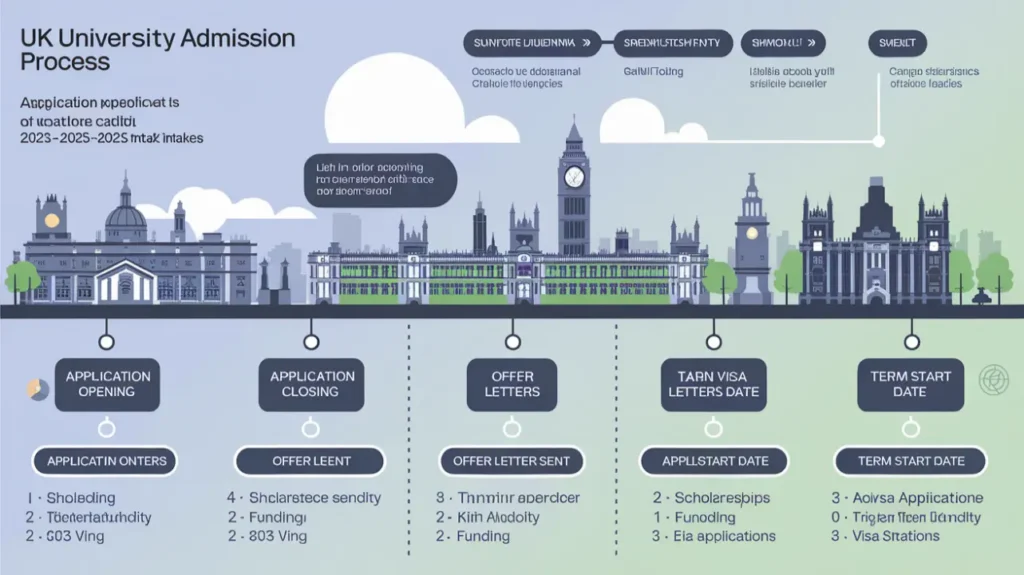
Introduction Navigating the UK university admission process can be complex, especially for international students. Understanding key dates and deadlines is crucial to ensure a smooth application experience. This blog aims to guide students through the 2025-2026 UK university admission timeline, helping them plan their applications effectively. The Universities and Colleges Admissions Service (UCAS) regulates the entire UK process for university admission to undergraduate programs. Students submit their postgraduate course applications directly to the universities. The application process comprises four essential steps: researching courses, making application materials, and then submitting applications before obtaining acceptance offers. International students must pay close attention to essential dates because their arrival includes visa preparation and finding appropriate accommodation. Students who miss important deadlines risk being deferred from their admission or finding themselves without course options. Follow-up with application time limits is vital because proper preparation needs to happen on time. This blog will outline the critical dates for the 2025-2026 intakes, providing a comprehensive guide to help international students navigate the UK university admission process successfully. Understanding UK University Intakes Understanding the various university intakes in the UK is essential for international students planning their academic journey. The UK primarily offers three intakes: September/Autumn, January/Winter, and May/Spring. Each intake has distinct characteristics, advantages, and considerations. 1. September/Autumn Intake 2. January/Winter Intake 3. May/Spring Intake Choosing the Right Intake Selecting the appropriate intake depends on various factors, including course availability, personal readiness, and career objectives. International students should: Understanding these intakes and their respective benefits enables international students to make informed decisions, ensuring a smoother transition into the UK higher education system.
The Future of Studying in Canada: Policy Updates Every Student Should Know

Introduction Overview of Canada’s Appeal to International Students Canada has long been a top destination for international students, offering world-class education, a diverse cultural environment, and promising post-graduation opportunities. With globally recognized universities, a high standard of living, and a reputation for being welcoming, Canada attracts thousands of students each year from around the world. Some key reasons why students choose Canada include: However, policy changes in 2025 are reshaping the international education landscape in Canada, affecting everything from study permits to post-graduation work eligibility. Purpose of the Blog This blog aims to provide a clear and updated understanding of recent policy shifts that impact international students in Canada. Whether you’re a prospective student planning to apply or a current student navigating new regulations, this guide will help you make informed decisions about your studies and future in Canada. Reduction in Study Permits New Permit Caps for 2025 In response to growing concerns about housing shortages, healthcare strain, and the overall infrastructure burden, the Canadian government has announced a reduction in the number of study permits for international students in 2025. Implications for Prospective Students The reduction in study permits means that securing a spot at a Canadian institution will become more competitive. Students planning to study in Canada must take proactive steps to increase their chances of approval: Changes to Off-Campus Work Hours Adjustment of Work Hour Limits Starting in 2025, Canada has introduced a new off-campus work policy that allows eligible international students to work up to 24 hours per week while their classes are in session. This replaces the temporary 40-hour limit that was in place during certain periods. Balancing Work and Studies While the increase to 24 hours per week is beneficial, students must manage their time wisely to ensure they maintain strong academic performance. Here are some strategies to balance work and studies effectively: Revised Post-Graduation Work Permit (PGWP) Eligibility Updated Criteria Based on Program and Language Proficiency The Canadian government has introduced new eligibility criteria for the Post-Graduation Work Permit (PGWP) in 2025, aiming to align international graduates with labor market demands. For University Graduates (Bachelor’s, Master’s, or Doctoral Degrees) For College Graduates Impact on Career Planning These changes mean that choosing the right program is more crucial than ever for international students hoping to secure post-graduation work opportunities. Here’s how students can maximize their chances: Changes to Study Permit Application Process Requirement for Provincial or Territorial Attestation Letter Since 2025, all international student study permit applicants must present a Provincial or Territorial Attestation Letter (PTAL). Each application must adhere to federal study permit limits through this requirement to direct provincial management of incoming international student numbers. Elimination of Port of Entry Applications Another significant policy shift is the elimination of study permit applications at ports of entry (POE). This means that: Tips for a Smooth Application Process To avoid delays and improve the chances of approval, students should: ✅ Ensure all documents are complete and accurate, including proof of acceptance, financial support, and language test results.✅ Follow the latest application procedures, as requirements may differ based on the province and institution.✅ Apply as early as possible, considering that PTAL availability may be limited in some provinces. Restrictions on Spousal Open Work Permits Limited Eligibility In 2025, Canada restricted the Spousal Open Work Permit (SOWP) to apply only to students married to partners earning professional degrees. The new measure wants to restrict temporary worker entry into Canada and support needs in shortage areas. Eligible Programs for Spousal Open Work Permits: Spouses of students in non-professional degree programs (such as general arts, business, or social sciences) are no longer eligible for an open work permit under this policy. Considerations for Families These new restrictions significantly impact families planning to move to Canada together. Here are key factors to consider: Prospective students and their families should carefully evaluate financial and career plans before applying to study in Canada under the new regulations.
Why More Pakistani Students are Opting for Cyprus in 2025
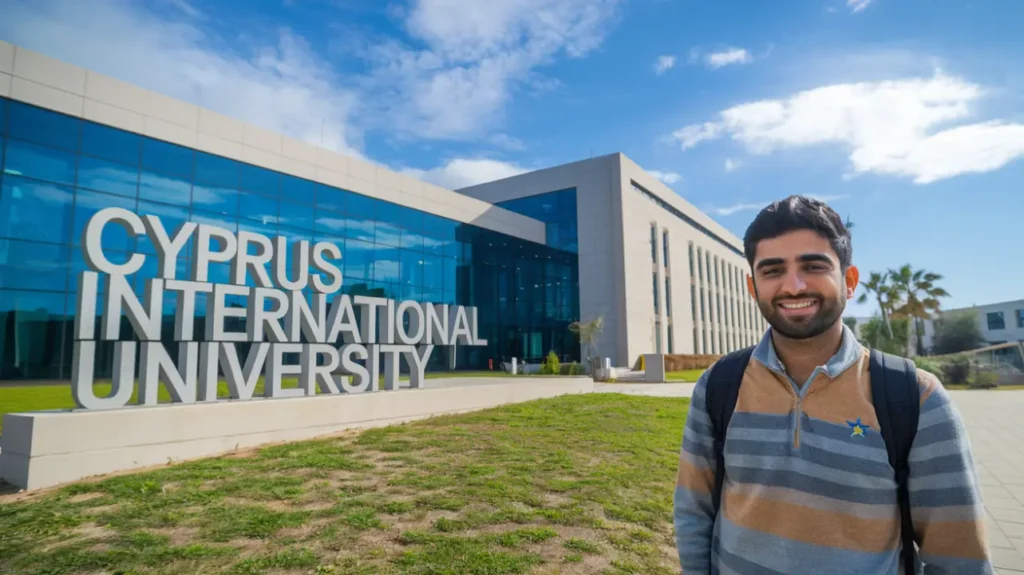
Introduction In recent years, Cyprus has emerged as an increasingly popular destination for Pakistani students seeking quality higher education. Known for its affordable tuition fees, diverse academic programs, and welcoming environment, Cyprus is becoming a top choice for those aspiring to study in Europe. An increasing number of Pakistani students have begun to understand why Cyprus provides them with exceptional benefits in pursuing their studies. The Mediterranean nation attracts more Pakistani students by providing simplified visa systems and English-language educational opportunities. Cyprus will attract an increasing number of Pakistani students for academic purposes in 2025 because of key participating factors, which this blog will analyze. Students should learn about these factors because the information helps them choose educational programs abroad effectively. Affordable Quality Education One of the primary reasons why more Pakistani students are opting for Cyprus in 2025 is the affordability of higher education without compromising on quality. Compared to other popular European study destinations, Cyprus offers competitive tuition fees that make it an attractive option for budget-conscious students. Comparison of Tuition Fees This significant difference in cost makes Cyprus an economical choice for Pakistani students, particularly those looking for quality education at an affordable price. Balancing Cost and Quality Universities in Cyprus provide high academic quality even though they charge lower fees to their students. They offer contemporary facilities with expert faculty members who deliver internationally accredited curricula. The European universities partnered with institutions that provide their students with an education that satisfies international standards through their cross-institutional programs. Cyprus’s affordable price structure makes it an attractive destination for students from abroad. Students can study in this European country without incurring high daily expenses. The combination of low housing costs and economical transportation and food expenses helps students handle study expenses better. In essence, Cyprus provides a balanced environment where Pakistani students can access quality education at a reasonable cost, making it an ideal destination for higher studies in 2025. English-Taught Programs Another key factor attracting Pakistani students to Cyprus in 2025 is the wide availability of English-taught programs. This makes the transition to higher education smoother for students from Pakistan, where English is commonly used in academic settings. Availability of Diverse Programs Offered in English Cypriot universities offer a broad range of undergraduate and postgraduate programs in English, covering fields such as: These programs are designed to meet international standards, providing students with the skills and qualifications needed for global career opportunities. Appeal to Pakistani Students English-taught courses eliminate language learning requirements for Pakistani students pursuing their studies. The opportunity to study courses in English cuts down learning time and expenses while enabling students to concentrate on their academic targets from their first day of enrollment. The education environment in English causes Pakistani students to improve their language capabilities, which proves essential for international employment opportunities. Students benefit from English-taught courses because these programs enhance their ability to communicate effectively and simplify discussions inside and outside class. Pakistani students who study in Cyprus benefit from internationally recognized qualifications through a familiar language framework, thereby making Cyprus perfect for higher education in 2025. Simplified Admission and Visa Processes One of the biggest advantages of studying in Cyprus is the straightforward admission and visa process, making it easier for Pakistani students to secure their place at a university without unnecessary delays or complications. Overview of the Admission Requirements Cypriot universities have flexible and accessible admission criteria, making higher education more attainable for international students, including those from Pakistan. The general requirements typically include: Since Cypriot universities have rolling admissions, Pakistani students can apply throughout the year, with multiple intake periods for added flexibility. Visa Application Process and Success Rates The student visa process for Cyprus is relatively simple compared to other European countries, with a high approval rate for Pakistani applicants who meet the requirements. Steps for Student Visa Application: Upon arrival in Cyprus, students are required to complete residence permit formalities, which are straightforward and guided by the university. Why This Is a Major Advantage for Pakistani Students? The simplified admission and visa process is a major reason why more Pakistani students are choosing Cyprus in 2025, making it a convenient and accessible study destination. Cultural Affinity and Diverse Community One of the key reasons why more Pakistani students are choosing Cyprus in 2025 is the country’s multicultural environment, which makes it easier for international students to adjust and feel at home. Cyprus is known for its diverse student population, with universities welcoming students from all over the world, including a growing number from Pakistan. A Multicultural Learning Environment Cyprus offers a rich cultural blend, with influences from Europe, the Middle East, and Asia. This diversity creates an inclusive and welcoming atmosphere for international students, allowing them to interact with peers from various backgrounds while broadening their global perspectives. This multicultural setting helps Pakistani students integrate smoothly, making Cyprus a comfortable and familiar environment for studying abroad. A Growing Pakistani Student Community As more Pakistani students enroll in Cypriot universities, a strong and supportive student community has emerged. This helps new students settle in and navigate their academic and personal lives more easily. This sense of belonging and community support makes Cyprus an attractive destination for Pakistani students, ensuring they don’t feel isolated while pursuing their education abroad. Why Cultural Affinity Matters? With its multicultural environment and a growing Pakistani student presence, Cyprus offers an educational experience that is both academically rewarding and culturally enriching.