How Pakistani Graduates Can Apply for STEM OPT in the United States

Introduction For many international students in the United States, the journey doesn’t end at graduation. Especially for those in science, technology, engineering, and mathematics (STEM) fields, there’s an exciting opportunity to gain valuable work experience through the STEM Optional Practical Training (STEM OPT) program. This extension allows eligible students to work in the U.S. for up to 24 months beyond their initial 12-month OPT period—offering a critical pathway to real-world experience and even potential long-term employment. For Pakistani graduates, this extension is not just a professional milestone—it’s a chance to build a career in one of the world’s most competitive job markets. With the growing number of Pakistani students pursuing advanced STEM degrees in the U.S., understanding the STEM OPT application process is more important than ever. In this blog, we’ll walk you through how Pakistani graduates can apply for STEM OPT in the United States, including eligibility criteria, required documents, timelines, and practical tips to avoid common mistakes. Whether you’re just finishing your degree or about to apply for your extension, this guide will help you navigate the process with confidence. Understanding STEM OPT The STEM Optional Practical Training (STEM OPT) is an extension of the standard Optional Practical Training (OPT) program available to F-1 visa holders who graduate from U.S. institutions. While the regular OPT allows international students to work for 12 months after completing their degree, STEM OPT provides an additional 24 months of work authorization—but only for students with degrees in eligible STEM fields. What Makes STEM OPT Different? Why It Matters This extension can make a huge difference in your career trajectory. It gives you more time to gain hands-on experience, build a professional network, and potentially transition to an H-1B visa or other long-term employment options in the U.S. In the next section, we’ll look at who qualifies for STEM OPT, especially from the perspective of Pakistani graduates.
Visa Suspension for Harvard Foreign Students by Trump Sparks Elite University Showdown

Introduction: When Politics Disrupts Education In an unexpected and sharp move, former U.S. President Donald Trump announced a sweeping visa suspension for foreign students at Harvard, triggering outrage from academia and legal experts alike. This visa freeze has escalated tensions between the U.S. government and elite universities—raising serious concerns around academic freedom, institutional independence, and the international future of U.S. education. For aspiring Pakistani students, especially in cities like Faisalabad, lahore & Islamabad, this decision throws yet another wrench into an already complex overseas study process. That’s where Endeavours Consultants Pvt. Ltd steps in—with clarity, strategy, and solutions tailored for your future. Proclamation Breakdown: What Was Announced? On June 4, a presidential proclamation ordered: According to U.S. sources, Harvard was labeled “untrustworthy” in managing international student programs, citing FBI and DHS reports of alleged foreign interference, espionage, and academic manipulation. This move is seen as the latest in a series of clampdowns including: Harvard’s Response: Legal and Vocal Rebuttal Harvard didn’t take this sitting down. The clash has ignited a nationwide legal showdown over how far a U.S. president can go in targeting a single institution under the banner of national security. Is This Really About Security… or Politics? Supporters of the move claim it’s essential to protect U.S. borders from espionage and unauthorized research activities—especially from students tied to geopolitical rival nations. However, critics point to timing and context: In short, this isn’t just a visa issue—it’s a political drama dressed as policy. What This Means for Students — Especially in Pakistan Harvard alone hosts 7,000+ international students, a significant portion of them on F‑1 or J‑1 visas. Many come from Pakistan, India, China, and Nigeria. Here’s what you, as a Pakistani applicant, need to understand: ❌ Visa Uncertainty 💡 Academic Risk 🔍 Immigration Watch How Endeavours Consultants Pvt. Ltd Helps You Adapt At Endeavours Consultants Pvt. Ltd, we don’t just process applications—we build backup-proof strategies for students across Pakistan. Here’s how we’re helping students navigate the chaos: 1. Smart Visa Planning 2. Alternate Destinations Strategy 3. Digital Readiness Tools 4. GMB-Linked Local Access The Global Ripple Effect 🌍 This proclamation doesn’t just affect Harvard—it changes the perception of the U.S. as a safe, welcoming destination. Legal Stakes: The Fight for Freedom in Court Harvard’s lawsuit argues: Early court decisions favor Harvard, but a Supreme Court showdown may still come. Trump’s Broader Education Agenda This is not a one-off action. Trump’s policies during his second term also include: These moves have stirred global debate around academic independence, authoritarianism, and ideological policing. What’s Next? Your Action Plan 🧭 ✅ Immediate Steps: 🔮 Longer-Term: Final Thoughts The visa suspension for Harvard students isn’t just a policy—it’s a signal. A sign that academic dreams now require smarter planning, faster decisions, and reliable guidance. That’s exactly what we offer at Endeavours Consultants Pvt. Ltd. If you’re from Faisalabad (or anywhere in Pakistan), your path to global education is still open—just with new doors. Let us help you walk through them. 📞 Call us | 💬 Chat on WhatsApp | 📍 Visit us in Faisalabad & Lahore Don’t let politics pause your future.Let Endeavours Consultants guide your next step.
Study in Norway? Get Ready for University-Specific Tuition Fees
Introduction For years, Norway has been celebrated as one of the few countries offering tuition-free higher education to both domestic and international students, regardless of nationality. This made it a top destination for students from around the world seeking high-quality education without the burden of high tuition costs. However, a significant shift in policy has recently changed the landscape for international education in Norway. Starting in 2025, Norwegian universities have been granted the authority to set their own tuition fees for students from outside the European Union (EU) and European Economic Area (EEA). This move marks a departure from the country’s long-standing commitment to free education for all. In this blog, we’ll explore what this change means for prospective international students, how tuition fees may vary by university, and what you should consider when planning to study in Norway under this new system. What Changed? Norway’s New Tuition Policy In a move that surprised many in the global education community, the Norwegian government announced that starting from the 2025 academic year, universities would be allowed to set their own tuition fees for students from outside the EU and EEA. This decision breaks from Norway’s traditional model of free education and aligns more closely with policies seen in many other European countries. According to this new policy, public universities are not expected to give free education to non-European students. Rather, they can know the tuition cost depending on the type of program, academic program, and the resources of the institution. Every university can now have the freedom to charge any price to international students who are not EU/EEA citizens. This change does not apply to the EU/EEA students as well as the students of the country with which Norway has special agreements because they will have the possibility to study without paying a fee. But the students of other countries, including Pakistan, India, Nigeria, the U.S., and other countries, that are not situated in the EU/EEA zone, consider this to be one of the focal points for admission to Norwegian universities because of the expenses. Why the Change? Norway’s decision to shift away from tuition-free education for non-EU/EEA students stems from a mix of economic, political, and educational policy factors. The primary reason cited by the Norwegian government is cost-efficiency and sustainability. With increasing numbers of international students, the financial burden on the state was growing, especially when tuition was fully subsidized. The authorities claim that education must be affordable but it is not fiscally possible to keep giving free education to every international student not to mention those who might not end up staying in Norway once they obtain their degrees. Through this move, the government hopes that due to tuition fees, the universities will be more economical in the use of the resources and will also reduce the monetary burden. Also with the change, Norway will be on the pattern of other Nordic and European countries including Sweden and Denmark have already started implementing tuition fees for non-Europeans. However, the policy has sparked debate. Critics worry it may reduce diversity and limit access for talented students from low- and middle-income countries. Universities themselves are responding in varied ways—some cautiously optimistic about the flexibility to set competitive fees, while others express concern about a potential drop in international applications. What This Means for International Students For international students—especially those from outside the EU and EEA—this policy shift has significant implications. Perhaps the most important change is that tuition is no longer standardized or free. Instead, fees will now vary from one university to another, and even between programs at the same institution. This means that if you’re planning to study in Norway, you’ll need to: In addition, this transition also influences the way you budget. The cost of living in Norway is already high and it is set to be higher due to the introduction of tuition fees as international students must brace themselves to spend more. This may affect your university selection, as well as, your program of study and even your decision to study in Norway. It also emphasizes the importance of seeking scholarships, grants, or other financial support, which may now become more competitive as demand increases. Examples of Tuition Fee Ranges With universities now setting their own tuition fees, the cost of studying in Norway can vary widely depending on the institution and program. While some universities are still finalizing their pricing models, early examples provide a general idea of what non-EU/EEA students can expect: 1. University of Oslo (UiO) 2. Norwegian University of Science and Technology (NTNU) 3. BI Norwegian Business School (Private) 4. University of Bergen (UiB) It’s also worth noting that some universities may offer tuition waivers or scholarships for high-achieving students or those from specific regions. However, these opportunities are expected to be limited and highly competitive. How to Plan Your Application in Light of the New Fees With Norway’s shift to university-specific tuition for non-EU/EEA students, thorough planning is more important than ever. Here are key steps to help you navigate the new financial landscape and make informed choices: 1. Start Research Early Begin by identifying the universities and programs you’re interested in. Visit their official websites to: 2. Compare Universities and Programs Since tuition now varies by institution and subject: 3. Plan Your Budget Carefully Include: 4. Look for Financial Aid and Scholarships While fewer scholarships may be available compared to tuition-free days, some options still exist: 5. Prepare for the Student Visa Process To secure a study permit in Norway, you must: 6. Apply Strategically Apply to a mix of universities:
2025 PTE Fee Structure in Pakistan: A Step-by-Step Overview
Introduction The Pearson Test of English (PTE) is one of the most widely recognized English proficiency exams used by students, professionals, and immigrants worldwide. Whether you’re planning to study abroad, migrate for work, or apply for permanent residency, the PTE offers a fast, computer-based alternative to traditional tests like IELTS and TOEFL. As we move into 2025, it’s crucial to stay informed about the updated PTE fee structure in Pakistan. Understanding the exact costs—whether it’s the base exam fee, rescheduling charges, or cancellation policies—can help you plan your application process more efficiently and avoid unexpected expenses. This blog is specifically designed for Pakistani students, skilled workers, and immigration applicants who are considering the PTE as part of their journey abroad. We’ll break down the 2025 PTE fees step by step, so you can make informed decisions with confidence. 1. What is the PTE Exam? The Pearson Test of English (PTE) is a globally recognized, computer-based English language proficiency test. It is designed to assess the reading, writing, listening, and speaking skills of non-native English speakers. PTE is commonly used for academic admissions, work visas, and immigration purposes in countries like Australia, New Zealand, the UK, and Canada. There are two main types of PTE exams: One of the key reasons PTE is popular in Pakistan is its quick result turnaround (usually within 48 hours), fully computer-based format, and flexible test dates throughout the year. Additionally, PTE scores are accepted by thousands of institutions and government bodies worldwide. 2. PTE Test Fee in Pakistan for 2025 As of 2025, the standard PTE Academic test fee in Pakistan is approximately PKR 59,000 to PKR 61,000, depending on the current exchange rate and tax implications. This fee is subject to change based on currency fluctuations and policy updates from Pearson or local test centers. Here’s a quick breakdown: Fee Type Approximate Amount (PKR) Standard PTE Academic Fee 59,000 – 61,000 Late Booking Fee Additional PKR 8,000 – 10,000 Rescheduling Fee Varies (see section below) Cancellation Fee Varies by notice period Note: It’s always best to verify the latest fee directly on the official Pearson PTE website or through authorized test centers in Pakistan like AEO or UKVI-approved venues in cities like Lahore, Karachi, and Islamabad. Keeping track of the official fee helps you avoid scams or misinformation when booking your test. 3. Breakdown of Additional Costs In addition to the standard PTE test fee, you may encounter extra charges depending on how and when you manage your booking. Here’s a detailed look at the common additional costs associated with the PTE exam in Pakistan for 2025: ✅ Late Booking Fee If you book your test within 48 hours of the test date, a late fee will apply. 🔄 Rescheduling Fee Need to change your test date? Rescheduling is possible, but charges depend on how early you make the change: ❌ Cancellation Fee If you cancel your test: 📤 Additional Score Reports The first few score reports are usually free. However, if you need to send scores to more institutions later: 4. Payment Methods Accepted in Pakistan Booking the PTE exam in Pakistan is a smooth process, especially when it comes to payment. Pearson and its authorized test centers accept multiple payment options, making it convenient for candidates across the country. 💳 1. Credit and Debit Cards The most common and recommended method: Tip: Ensure your card is enabled for international transactions before using it to avoid payment failures. 🏦 2. Online Bank Transfers (via Third-Party Platforms) Some authorized partners in Pakistan (such as AEO or specific test booking services) may allow: Always verify that you’re dealing with an official partner to avoid fraud. 💻 3. Digital Wallets or Payment Gateways Though not commonly used, some international platforms support: 🔐 Important Payment Tips
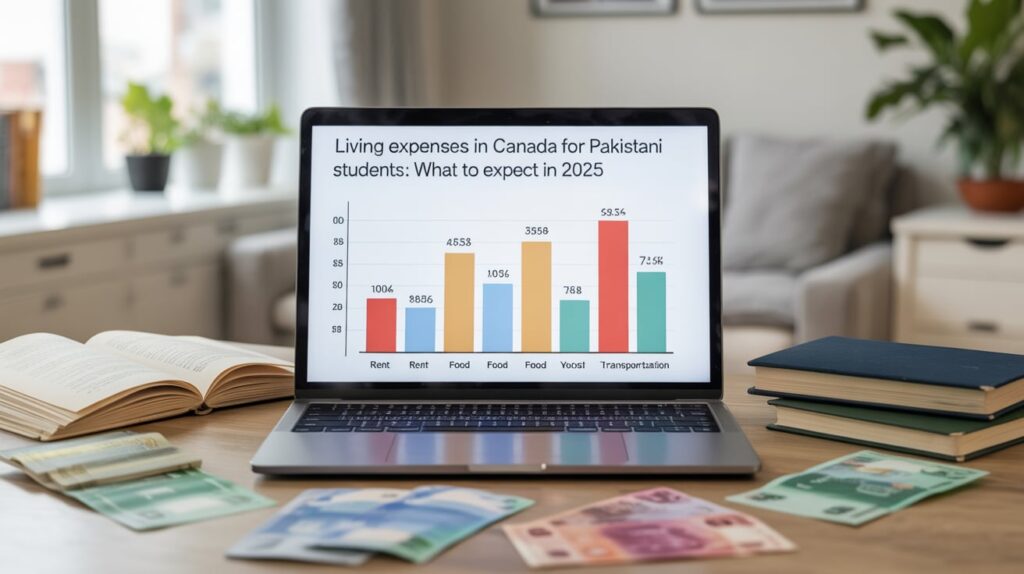
Living Expenses in Canada for Pakistani Students: What to Expect in 2025
Introduction Canada has become one of the top study-abroad destinations for Pakistani students, thanks to its high-quality education, diverse culture, welcoming immigration policies, and globally recognized universities. Each year, thousands of Pakistani students choose Canada not just for academics, but also for the promise of a better future and career opportunities. However, while planning to study in Canada, it’s essential to understand the cost of living, which often goes beyond tuition fees. From accommodation and food to transportation and personal expenses, having a clear picture of day-to-day costs can help students and their families prepare financially and avoid surprises. In this blog, we’ll explore what Pakistani students can expect in terms of living expenses in Canada in 2025, based on updated estimates and current trends. Whether you’re heading to Toronto, Vancouver, or a smaller city, this guide will help you plan a realistic student budget. Tuition Fees (A Quick Recap) 🎓 Average Tuition Costs (Undergrad & Postgrad) 📍 Provincial & University Variations 📈 Fee Trends & Anticipated 2025 Increase 📊 Summary Snapshot Table Program Level Typical Annual Range (CAD) Notes Undergraduate 34,000 – 46,000+ Varies by province & major Master’s 23,000 – 50,000+ MBAs, healthcare more costly PhD 7,000 – 15,000 Often funded 4-year Degree Total 70,000 – 190,000 More affordable in smaller provinces 💡 What It Means for 2025 Expect budgets to reflect not only your chosen province and university, but also the annual tuition hikes (5–15%). For instance, a bachelor’s student in Ontario could be paying closer to CAD 48,000+ per year, whereas in Newfoundland it may remain at CAD 7,000–12,000, especially at freeze-holding institutions like Memorial U. 🏠 Accommodation Costs 1. On‑campus vs Off‑campus Housing On‑campus: Residence halls offer convenience and include utilities, internet, sometimes meals. Prices range from CAD 3,000 to CAD 8,000 per academic year (typically 8 months) depending on the university and room type. For example, McGill’s single rooms can cost around CAD 1,400–1,800/month including mandatory meal plans and fees. Off‑campus: 2. Average Rent in Major Cities City-wise typical monthly rents: City Studio / Private Room Shared Room 1‑Bedroom Private Toronto CAD 1,800–2,500 CAD 900–1,400 CAD 2,041 avg Vancouver CAD 1,200–2,500 CAD 600–1,400 — Montreal CAD 1,200–1,775 CAD 600–900 — Ottawa / Calgary CAD 1,300–1,800 CAD 700–1,100 — Halifax / Quebec City CAD 1,000–1,600 CAD 550–850 — Recent rental reports show shared accommodation rents fell ~9.9% in Vancouver and 8.8% in Montreal, with average shared room rent around CAD 1,323 and CAD 870 respectively. 3. Shared vs Private Rentals 4. Security Deposits & Upfront Costs 💡 Summary Tips
Your 2025 German University Deadline Planner – For Pakistani Students
Introduction Germany has become one of the top study destinations for Pakistani students in recent years — and for good reason. With its world-class universities, low or no tuition fees, and a strong focus on research and innovation, Germany offers excellent academic and career opportunities. Whether you’re aiming for an engineering degree, a master’s in business, or a course in social sciences, Germany has something for everyone. But while the educational prospects are exciting, one of the biggest challenges Pakistani students face is navigating the university application process — especially when it comes to deadlines. Missing a deadline could mean delaying your plans by an entire semester or even a full academic year. That’s why this blog serves as your complete 2025 deadline planner. From understanding German intakes to keeping track of important application and visa dates, this guide is tailored specifically for Pakistani students who want to stay ahead and submit successful applications on time. Understanding German University Intakes German universities offer two main academic intakes each year: the Summer Semester and the Winter Semester. Understanding these intakes is crucial for Pakistani students as it directly impacts your application deadlines, visa timelines, and overall preparation strategy. 1. Summer Intake (March/April) The summer semester typically commences in either March or April. Although there is a limited number of programs at this intake compared to the winter semester, some technical universities and particular master’s master’s degree programs vacate seats at this time. The intake of summer usually opens in November and closes in mid-January (January 15th for Uni-Assist universities). 2. Winter Intake (September/October) This is the main intake for most German universities, with a wider range of bachelor’s and master’s programs available. The winter semester begins in September or October, and applications usually open around April or May, with deadlines falling between July 15th and August 31st, depending on the university and application type. Which Intake Is Better for Pakistani Students? For most Pakistani students, the Winter Intake is generally the better option. Here’s why: However, if you’re fully prepared early in the year and your desired course is available in the summer, the Summer Intake can be a great opportunity to avoid peak competition. How Intake Choice Affects Deadlines and Visa Timing Your intake choice affects the entire application timeline: By choosing your intake wisely and planning accordingly, you can reduce stress and increase your chances of timely enrollment. Key 2025 Application Deadlines for Pakistani Students Knowing the exact timeline for university applications in Germany is essential, especially for students applying from Pakistan, where additional steps like visa processing and document attestation can take extra time. Below is a breakdown of the general application timelines for both the Winter 2025 and Summer 2025 semesters. Winter Semester 2025 (Starting September/October) The Winter Semester is the main academic intake in Germany, offering the widest range of bachelor’s and master’s programs. Summer Semester 2025 (Starting March/April) The Summer Semester has fewer programs available, especially at the undergraduate level. However, many master’s programs and technical courses are offered.
GED Scores Explained: From Passing to College-Ready Levels
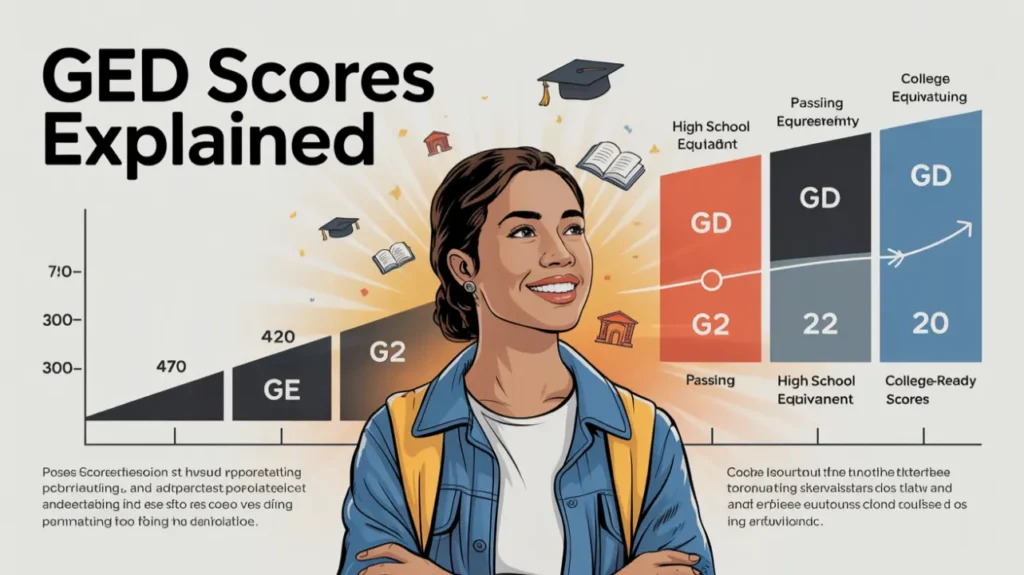
Introduction The GED exam is far more than just a test you need to pass—it’s a powerful stepping-stone to college and career opportunities. Earning your GED opens doors to jobs, vocational training, military service, and higher education that would otherwise be out of reach . By understanding the different GED score levels—from the basic passing threshold to higher tiers indicating college readiness and potential for college credit—test-takers can set informed, strategic goals. Knowing your target score helps you prep smarter, save time and money, and take full advantage of what the GED credential can offer . GED Scoring Basics Scoring Scale Passing Threshold Independent Scoring Performance Level Breakdown Level 2 – High School Equivalency (145–164) Level 3 – College Ready (165–174) Level 4 – College Ready + Credit (175–200)
Student Visa Processing Resumes in the US: Key Updates for 2025 Applicants
Introduction After months of uncertainty, the United States has officially resumed student visa processing, bringing a wave of relief and excitement for international students planning to study in the U.S. in 2025. This decision comes after a period of delays and disruptions caused by global events and administrative backlogs that left many students in limbo. For thousands of aspiring scholars around the world, this update is a crucial turning point. The reopening of student visa services not only signals a return to normalcy but also reaffirms the U.S. commitment to welcoming global talent into its higher education system. In this blog, we’ll break down the key updates for 2025 applicants—including what’s changed in the visa process, important timelines you need to keep in mind, and practical tips to ensure a smooth and successful application journey. Background: Why Student Visa Processing Was Paused The temporary suspension of U.S. student visa processing was primarily driven by a combination of global and administrative challenges. Most notably, the COVID-19 pandemic led to the closure of many U.S. embassies and consulates worldwide, causing widespread delays in visa services. Health-related travel restrictions, staffing shortages, and safety protocols further complicated the process. Besides the pandemic, changes in immigration policies during past administrations in the USA also raised additional concerns about international students. The modification of visa eligibility regulations, the introduction of travel bans, and changes in documentation requirements have led to a decrease in the rate of student visa approvals. The consequences were tremendous. Thousands of students were forced to postpone their education, change their destination, or return to online classes from home. U.S. universities were also not spared, as international students bring a significant percentage of the diversity to a campus, facilitate global exchange, and contribute to tuition income. Timeline of Key Events Leading to Resumption: This long-awaited development marks a renewed focus on international education, signaling more accessible pathways for students planning to study in the U.S. starting in 2025. What’s New in 2025: Major Updates for Applicants 1. Mandatory Social Media Disclosure 2. New Social Media Vetting Protocol 3. OPT Grace Period Extended 4. Interview Waiver Program Changes 5. Country-Specific Considerations 🔍 Summary Table Update What You Should Know Social media publicness Make all profiles public; clean up content to avoid flagging Social media vetting extent Scrutiny of online presence, including screenshots, for both new and renewing students OPT grace period Enjoy 60 extra days post-OPT to transition or prepare for departure Interview waiver availability Possible, but check local embassy rules—especially for India/Pakistan Country-specific hurdles Expect stricter vetting if you’re from listed high-risk countries; anticipate delays ✅ 1. Get Admission & Receive Form I‑20 💰 2. Pay the SEVIS I‑901 Fee 📝 3. Complete the DS‑160 Form 📅 4. Book a Visa Appointment 🎤 5. Attend the Visa Interview ✈️ 6. Receive Your Visa & Prepare for Travel 📋 Quick Recap Step What to Do 1 Get accepted → receive I‑20 2 Pay SEVIS fee → save receipt 3 Fill and submit DS‑160 (2–3 days before interview) 4 Book interview with all docs ready 5 Attend interview with public social media 6 Collect visa + travel ≤30 days ahead 🎯 Common Interview Questions Be ready to answer clearly and concisely: 📋 Documents You Must Bring Organize these essentials: ✅ Do’s and ❌ Don’ts During the Interview Do: Don’t: 🧩 How to Demonstrate Intent to Return Home Strong ties to your home country are crucial: 💬 Voices from Applicants & Experts From a former U.S. visa interview coach on Reddit: “Be polite but not obsequious… Omit ‘sir’ or ‘ma’am’—you sound more American and conversational.”“Do not sound too rehearsed… Short answers are usually better.” ✅ Quick Reference Table Category Key Advice Interview tone Be polite, professional, confident Answer style Short, honest, natural—not scripted Documents Passport, DS‑160, I‑20, SEVIS receipt, finances, proof of ties Demonstrate return Show ties: job offers, property, family, future plans Avoid Memorized replies, immigration intent, arguments, lying Common Challenges and How to Overcome Them 🛠️ 1. Long Wait Times for Appointments 2. Administrative Processing Delays 3. Visa Denials & How to Reapply 4. Financial Documentation Concerns Key Dates & Deadlines for Fall 2025 Intake 🗓️ Milestone Timeline Admission Decisions Feb–Apr 2025 I‑20 Issued Upon acceptance (Feb–May 2025) DS‑160 & SEVIS Fee May–Jun 2025 Visa Appointment Booking Jun–Jul 2025 Visa Interviews Preferably by Aug 2025 Entry to U.S. Up to 30 days before term start Final Thoughts: What This Means for International Education 🌍 This visa resumption represents more than just process normalization—it’s a reaffirmation of U.S. universities’ global engagement: In essence: The opportunity is here—be proactive, informed, and precise in your planning. Bonus: Useful Resources & Links 📚
Navigating Cultural Shifts: Essential Tips for Pakistani Students Studying Abroad
Introduction In recent years, an increasing number of Pakistani students have been pursuing higher education opportunities abroad, seeking world-class academic experiences and global exposure. While studying in a foreign country offers countless benefits — from career advancement to personal growth — it also comes with its unique set of challenges. Among these, adapting to a new cultural environment is often one of the most significant. Cultural variation may occur and affect even classroom interactions and everyday life. The ability to successfully navigate these transitions, however, is not only key to academic excellence but also to establishing satisfying relationships and having a fulfilling student experience. This guide provides practical and actionable suggestions to help Pakistani students overcome the fear of differences and make the most of their time in the new country. Understanding the Cultural Gap What is cultural difference? Cultural differences refer to the variations in customs, values, traditions, and social behaviors that exist between different societies. When Pakistani students move abroad, they often encounter new ways of thinking, communicating, and living that may be quite different from what they are used to back home. Common cultural contrasts between Pakistan and popular study destinations The concept of “culture shock” and its stages Culture shock is the emotional and psychological disorientation that people experience when they enter an unfamiliar culture. It typically unfolds in several stages: Recognizing these stages can help students normalize their experiences and manage their emotions as they adapt. Pre-Departure Preparation Preparing for cultural differences starts even before you board your flight. Taking some simple steps before departure can ease your transition and help you feel more confident as you settle into your new environment. Researching the host country’s culture, customs, and norms Start by learning about your destination country’s social norms, values, and lifestyle. Understanding how people greet each other, communicate, celebrate holidays, and handle daily routines can help you avoid misunderstandings. Explore topics like: Reliable sources include official government websites, cultural exchange programs, travel blogs, and videos created by international students. Learning basic language phrases and local etiquette Even if your host country primarily speaks English, learning a few local phrases shows respect for the culture and can make daily interactions smoother. Simple greetings, polite expressions, and basic directions can go a long way. Also, familiarize yourself with common etiquette such as: Connecting with fellow Pakistani students or alumni who studied there Reach out to current students, alumni, or Pakistani student associations in your destination country. They can offer first-hand insights, share personal experiences, and provide valuable tips for settling in. Many universities have online communities, forums, or social media groups where you can make these connections even before you arrive. Building these networks early can give you a sense of community and support when you start your journey abroad. Respecting and Adapting to New Social Norms Adapting to a new culture involves not only understanding differences but also respecting and adjusting to them in your daily life. Being open-minded and flexible will help you build positive relationships and avoid misunderstandings. Communication styles (direct vs. indirect) In many Western countries, communication tends to be direct, straightforward, and open. People often say exactly what they mean, and honesty is valued even in difficult conversations. In contrast, Pakistani culture often favors indirect communication, where politeness and avoiding confrontation are emphasized.As a student abroad, try to adapt to the more direct style while maintaining respect and politeness. If you’re unsure about something, don’t hesitate to ask for clarification — it’s seen as a sign of engagement, not ignorance. Dress codes and personal space Dress codes can vary depending on the country, institution, and setting. Generally, Western societies promote more casual attire in daily life but expect professional dress for formal occasions, presentations, or job interviews. Always check if there are specific cultural or institutional expectations.Personal space also differs. In many Western cultures, people maintain a greater physical distance during conversations and value personal boundaries. Avoid standing too close or touching others casually unless you know it’s culturally acceptable. Punctuality, manners, and classroom behavior Punctuality is highly respected abroad. Being late for classes, meetings, or social gatherings can be considered rude and unprofessional. Always plan to arrive on time or even a few minutes early.Classroom behavior may also be different from what you’re used to in Pakistan. Active participation, open discussions, and critical thinking are encouraged. You’re expected to share your opinions, ask questions, and even challenge ideas respectfully. Building a good rapport with professors and peers through active engagement can greatly enhance your academic experience. Adjusting to food habits and dietary preferences Food can be one of the biggest cultural adjustments. You may not always find familiar Pakistani dishes easily, especially in smaller cities. Be open to trying new cuisines while also finding ways to maintain your dietary preferences, whether halal, vegetarian, or other restrictions.Many international student communities share tips on where to find halal restaurants, grocery stores, or how to cook traditional dishes on your own. Learning basic cooking skills before you leave can be a helpful way to enjoy familiar meals abroad.
New UK Visa Rules May Target Pakistan, Nigeria, and Sri Lanka: What We Know So Far

Introduction The United Kingdom is poised to implement significant changes to its immigration policies, with a particular focus on tightening visa regulations for nationals from Pakistan, Nigeria, and Sri Lanka. These proposed measures stem from concerns over the increasing number of individuals from these countries who, after entering the UK on legitimate work or study visas, subsequently apply for asylum. In 2024 alone, over 40,000 asylum claims were made by individuals who initially arrived on legal visas, surpassing those who entered via unauthorized routes. The upcoming Immigration White Paper, which will be released in the coming month, focuses on tightening verification procedures to resolve these problems. The government implements upgraded screening methods that examine financial files and behavioral signals from applicants to uncover visa abuse issues. The government works toward improving immigration protocol integrity while preventing legitimate applicants from suffering disadvantages. This article delves into the proposed changes, examining their potential implications for prospective applicants from the targeted countries and the broader impact on the UK’s international relations and educational institutions. Background: Rising Asylum Claims and Visa Overstays In 2024, the United Kingdom witnessed a significant surge in asylum applications, reaching a record high of 108,138 claims—an 18% increase from the previous year and the highest number since records began in 1979 . Notably, a substantial portion of these claims were made by individuals who initially entered the UK on legitimate visas, such as those for work or study, and later sought asylum. Among the top nationalities applying for asylum were Pakistan, Nigeria, and Sri Lanka. Specifically, Pakistani nationals accounted for 10,542 asylum applications, making them the most common nationality among asylum seekers in 2024 . Many of these individuals had arrived in the UK through legal channels before transitioning to asylum status. The recent trend has caused UK government officials to grow concerned about possible abuse of visa regulations. Visa holders’ overstay behavior and transitions to asylum claim interest officials because they affect immigration control mechanisms and resource management systems. The government plans new strict visa policies aimed at Pakistanis, Nigerians, and Sri Lankans because they demonstrate high rates of visa overstays and asylum claims. The latest immigration measures seek to protect UK immigration regulations against visa abuse while resolving issues associated with overstays and subsequent asylum claims. Proposed Measures in the Upcoming Immigration White Paper The UK government is preparing to introduce significant changes to its immigration policies, particularly targeting nationals from Pakistan, Nigeria, and Sri Lanka. These measures aim to address concerns over visa overstays and the subsequent rise in asylum claims. The forthcoming Immigration White Paper outlines several key proposals: Enhanced Applicant Profiling In collaboration with the National Crime Agency, the Home Office is developing advanced profiling models to identify visa applicants who may be at higher risk of overstaying or submitting asylum claims after entry. This initiative involves analyzing behavioral indicators, such as low engagement in university courses, and scrutinizing applicants’ connections to known people smugglers or entities that facilitate system exploitation. The goal is to proactively detect and deter potential misuse of the visa system. Stricter Financial Scrutiny The government will enforce new strict financial evaluation tests for visa applicants. The evaluation process requires extended bank statements and financial document analyses to confirm applicants’ declarations about their UK self-sustainability capacity. Authorities aim to block people who declare false financial health for visa entry but request asylum after arriving in the UK. Limitations on Asylum Support Under proposed reforms, the government wants to limit taxpayer-funded accommodations, including hotels, for immigrants who stay past their visa expiration date before seeking asylum. These individuals will no longer be eligible for state-funded housing support through destitution claims. The government aims to cut public expenses and minimize asylum abuse through this new policy.