
Study Abroad Planning Made Easy: A Real Guide for Students Aiming High

Introduction Studying abroad is one of the most exciting opportunities for students who dream big and want to build an impactful global future. But while the idea of studying in another country sounds inspiring, the process can feel overwhelming—researching universities, preparing documents, securing visas, and managing finances. The good news? Study abroad planning doesn’t have to be complicated.This real, step-by-step guide will walk you through every stage of the journey and make the entire process easier, organized, and stress-free. Why Study Abroad? Key Benefits for Ambitious Students Studying abroad offers far more than just a degree. It gives you the chance to: ✔ Experience global exposure You’ll learn to communicate across cultures, understand diverse perspectives, and adapt to new environments. ✔ Boost your career opportunities International education is highly valued by employers. Graduates often enjoy better career prospects and higher salaries. ✔ Access world-class education Top universities abroad offer advanced research facilities, updated curriculums, and global networking opportunities. ✔ Build independence and confidence Living away from home helps develop maturity, problem-solving, and life skills. If you’re a student aiming high, studying abroad can be a defining step toward building an international future. Step 1: Identify Your Study Abroad Goals Before you start applying, ask yourself:What do I want from my study abroad experience? To make smart decisions, consider: • Your desired country Different countries offer different lifestyles, job opportunities, and study environments. Popular options include: • Your career goals Choose a program and destination aligned with your future job plans. • Your budget Tuition fees and living costs vary widely across countries. Understanding your financial limits early helps avoid surprises later. Setting clear goals from the start makes your study abroad planning much easier and more strategic. Step 2: Research Programs and Universities Once you know what you’re aiming for, the next step is finding the right university. How to shortlist the best universities? Tip: Always create a list of 3 safe, 3 moderate, and 3 top-tier universities to keep your chances strong. Step 3: Calculate Your Budget and Explore Funding Options Studying abroad is an investment, and proper financial planning is key. Typical costs to consider: Funding options for students: Proper budgeting ensures you stay financially secure throughout your international journey. Step 4: Prepare Your Application Documents This is a crucial part of study abroad planning. Different universities may require different documents, but most will ask for: • Academic transcripts and certificates Make sure they are official and properly attested. • Recommendation letters Choose teachers or employers who can highlight your strengths and skills. • Statement of Purpose (SOP) This is your personal story—why you want to study abroad, your goals, and why you chose this program. • English proficiency test results IELTS, TOEFL, PTE, or Duolingo—unless the university accepts alternatives. • CV or portfolio Especially important for creative, IT, and research-focused programs. Preparing strong documents increases your chances of acceptance significantly. Step 5: Apply to Your Chosen Universities Most universities abroad allow online applications through their official portals. What to remember while applying: After Submission: Applying smartly saves both time and stress during your study abroad planning. Step 6: Plan for Student Visa and Documentation Once you receive an offer letter, the next step is securing your student visa. Common visa requirements include: Visa Interview Tips: Being fully prepared helps you avoid unnecessary visa delays or rejections. Step 7: Prepare for Departure You’re almost ready to take off! This step involves practical and personal planning. Your pre-departure checklist: And don’t forget to mentally prepare for a new life abroad.Excitement and anxiety are both normal—embrace the journey! Bonus Tips for Students Aiming High To succeed abroad, remember these powerful tips: ✔ Manage your time wisely Balancing classes, assignments, and part-time work is crucial. ✔ Build strong networks Connect with professors, classmates, and industry professionals. ✔ Stay focused on your goals Studying abroad offers freedom—use it wisely. ✔ Keep a healthy balance Take care of your mental and physical well-being. High-achieving students know that discipline and consistency are key to making the most of their study abroad experience. Conclusion Planning to study abroad may seem challenging, but when broken down into clear steps, the process becomes simple and manageable.With the right information, strong preparation, and a positive mindset, you can confidently take the leap toward a global future. If you’re ready to dream big and aim high, this is your moment.Study abroad planning made easy starts with one brave decision—your decision. APPLY NOW!
Study Abroad in Finland Without IELTS: Is It Possible in 2025?

Introduction Finland has become one of Europe’s most attractive study destinations for international students seeking high-quality education, safety, and innovation. With globally ranked universities, a strong focus on research, and plenty of English-taught programs, it’s no surprise that thousands of students choose to study abroad in Finland each year. However, one common question many applicants ask is: “Can I study abroad in Finland without IELTS in 2025?” The good news is—yes, it’s possible! Let’s explore how you can achieve your study goals in Finland even if you don’t have an IELTS score. 1. Is IELTS Mandatory to Study in Finland? IELTS (International English Language Testing System) is one of the most popular exams used by universities worldwide to assess English proficiency. While many Finnish universities accept IELTS, it’s not always mandatory. Most universities in Finland offer flexibility in English language requirements, especially for students who can prove their proficiency in other ways. For instance, if you have previously studied in an English-medium institution or can demonstrate fluency during an interview, you might not need IELTS at all. So, the answer is clear: IELTS is not the only way to study in Finland. 2. How to Study in Finland Without IELTS in 2025 If you’re planning to study in Finland without IELTS, there are several alternative ways to prove your English proficiency. Here are the most common methods accepted by Finnish universities: 1. Proof of English-Medium Education If you completed your previous education (school or bachelor’s degree) in English, many universities in Finland will waive the IELTS requirement. You’ll simply need a certificate or an official letter from your previous institution stating that the medium of instruction was English. 2. University English Language Tests or Interviews Some Finnish universities conduct their own English proficiency interviews or internal language tests. If you perform well, you can gain admission without providing IELTS or TOEFL scores. 3. Alternative English Tests In 2025, universities in Finland also accept other internationally recognized tests such as: These are great options for students who want quicker, more flexible alternatives to IELTS. 3. Top Universities in Finland That Accept Students Without IELTS Many top Finnish universities are open to admitting international students without IELTS, provided they meet certain conditions. Here’s a list of popular institutions you can apply to: 1. University of Helsinki Finland’s oldest and most prestigious university often waives IELTS for students who studied in English-medium institutions or can prove proficiency through alternative means. 2. Aalto University A world-ranked university known for technology, business, and design programs. Aalto allows exemptions from IELTS if you have completed prior education in English. 3. Tampere University Accepts students without IELTS if they pass the university’s internal English assessment or hold a degree taught entirely in English. 4. University of Oulu Offers a wide range of English-taught programs and may accept students without IELTS based on academic performance and language certificates. 5. LUT University (Lappeenranta-Lahti University of Technology) Known for engineering and business programs, LUT University accepts proof of English-medium education instead of IELTS. 4. How to Apply to Finnish Universities Without IELTS Applying to Finnish universities without IELTS in 2025 is a simple process if you follow these steps: Pro Tip: Always double-check each university’s latest admission policy for 2025 before applying. 5. Study Visa Requirements for Finland Without IELTS Once you receive an admission offer, the next step is applying for a Finland student visa (residence permit). The Finnish Immigration Service (Migri) does not require IELTS for the visa process as long as your university has already confirmed your English proficiency. You’ll need to provide: This means your Finland study visa in 2025 is entirely possible without IELTS, provided your university admission doesn’t require it. 6. Cost of Studying and Living in Finland Finland offers affordable education compared to many Western countries, though tuition fees vary by program and university. Average Tuition Fees (per year) Living Costs Many international students work part-time (up to 30 hours per week) to cover living expenses. 7. Scholarships to Study in Finland Without IELTS Several scholarships are available for international students who want to study in Finland without IELTS: Most of these scholarships are based on academic merit, not IELTS scores. So even without IELTS, you can apply and qualify for financial aid. 8. Advantages of Studying in Finland Without IELTS Studying in Finland without IELTS offers several benefits: Finland’s education system focuses on creativity, critical thinking, and student independence—making it a top choice for ambitious learners worldwide. 9. Conclusion So, is it possible to study abroad in Finland without IELTS in 2025?Absolutely! Many Finnish universities accept alternative proofs of English proficiency, giving international students a chance to pursue higher education without the extra stress of IELTS. If you’re planning to study abroad in Finland without IELTS in 2025, start by researching university requirements early, preparing your documents, and applying through Studyinfo.fi. With world-class education, affordable tuition, and a high quality of life, Finland is an excellent choice for your academic journey.
Accurate CGPA to GPA Conversion Guide for International Students
Introduction When applying to universities abroad, one of the biggest challenges international students face is understanding how their grades compare to global standards. Different countries use different grading systems — and one of the most common tasks is converting CGPA to GPA. Accurate CGPA to GPA conversion ensures that your academic achievements are properly evaluated by universities in countries like the USA, Canada, the UK, and Australia. In this guide, you’ll learn everything you need to know about converting your CGPA into GPA — accurately, easily, and confidently. What Is CGPA and GPA? Before you start converting, it’s important to understand both terms: Key Difference: CGPA represents cumulative academic performance over time, while GPA focuses on performance over a shorter period — usually a semester or academic year. Why CGPA to GPA Conversion Matters for International Students Most international universities, especially in North America, require GPAs for admissions and scholarship evaluations. Converting your CGPA to GPA allows universities to assess your academic level fairly against their local grading systems. Here’s why accurate conversion is crucial: Common Grading Scales Around the World Grading systems vary from one country to another. Understanding how your CGPA fits into global scales can help you convert it correctly. Country/Region Grading System Scale Used United States GPA 4.0 Canada GPA 4.0 India CGPA 10.0 Pakistan CGPA / Percentage 4.0 or 10.0 Nigeria GPA 5.0 UK Percentage / Classification 100% Australia GPA 7.0 This table shows why using a CGPA to GPA calculator or official conversion chart is essential for accuracy. How to Convert CGPA to GPA Accurately While there is no universal formula (since every university may use a slightly different method), a commonly accepted approach for conversion is: Formula: [\text{GPA} = \left( \frac{\text{Your CGPA}}{10} \right) \times 4] Example: If your CGPA is 8.5 out of 10, then:[(8.5 / 10) \times 4 = 3.4]So, your equivalent GPA would be 3.4 on a 4.0 scale. Tips for Accurate Conversion: Online CGPA to GPA Calculator: Simplify the Process Manually converting grades can be confusing, especially with varying scales. That’s why using an online CGPA to GPA calculator is the easiest and most accurate method. Benefits of Using an Online Calculator: How to Use It: 👉 Pro Tip: Always include the grading system reference in your application (e.g., “8.5/10 CGPA equivalent to 3.4/4 GPA”). How Universities Interpret CGPA and GPA Different countries interpret GPAs differently. For example: Many universities also have their own conversion guidelines. Always check the official website or contact the admissions office before submitting your converted GPA. Expert Tips for International Students To ensure your grade conversion doesn’t cause application issues, keep these tips in mind: Common Mistakes to Avoid in CGPA–GPA Conversion Even a small mistake can misrepresent your academic profile. Avoid these common errors: Conclusion Accurate CGPA to GPA conversion is essential for international students planning to study abroad. By understanding your grading system and using reliable conversion methods or online tools, you can present your academic achievements clearly and confidently. Whether you’re applying to universities in the USA, Canada, UK, or Australia, taking the time to calculate your GPA from CGPA correctly ensures your efforts are recognized globally.
A Complete Guide to Studying Health Care Management at Murdoch University
Introduction Murdoch University, located in Perth, Western Australia, is a globally recognized institution known for its commitment to innovation, research excellence, and student success. With a strong focus on practical learning and global engagement, Murdoch attracts students from around the world who aspire to build impactful careers in diverse professional fields. In today’s rapidly evolving health care sector, effective management is essential to ensure quality patient care, efficient resource use, and sustainable system development. The growing demand for skilled health care managers has made programs in Health Care Management increasingly valuable for aspiring professionals who want to make a difference in the health industry. Murdoch University stands out as a top choice for studying Health Care Management due to its comprehensive curriculum, experienced faculty, and industry-aligned teaching methods. The program not only equips students with theoretical knowledge but also develops their leadership, analytical, and strategic decision-making skills — preparing them to excel in both local and international health care environments. Overview of the Health Care Management Program The Master of Health Care Management at Murdoch University is designed for professionals who aspire to take on leadership and administrative roles within the health sector. This program focuses on developing a deep understanding of health care systems, organizational management, and strategic planning, enabling graduates to address complex challenges in modern health care environments. The program is typically completed over 1.5 to 2 years of full-time study (or part-time equivalent), depending on your prior qualifications and study load. It combines core courses, electives, and practical learning experiences that help students apply theoretical knowledge to real-world situations. Throughout the course, students gain essential skills in health policy development, financial management, leadership, ethics, and evidence-based decision-making. The curriculum emphasizes critical thinking, problem-solving, and strategic leadership — preparing graduates to effectively manage teams, improve organizational performance, and influence health care policies. By the end of the program, Murdoch University graduates are equipped with the expertise to lead and innovate across hospitals, public health organizations, non-governmental agencies, and private health institutions worldwide. Curriculum and Core Subjects The Master of Health Care Management program at Murdoch University offers a well-balanced curriculum that integrates theoretical knowledge with practical experience. The courses are carefully designed to develop students’ managerial, analytical, and strategic skills — all essential for success in the modern health care environment. Major Courses and Electives Students begin with core units that provide a strong foundation in health care systems and management principles. Core subjects may include: After completing the core modules, students can choose elective units to tailor their learning experience. These electives allow students to specialize in areas such as public health management, health informatics, global health, or quality and safety in health care. Focus Areas The program emphasizes three key areas of professional development: Practical Learning and Real-World Experience Murdoch University’s program goes beyond classroom learning by incorporating real-world projects, case studies, and simulations. These experiences enable students to apply their knowledge to real challenges faced by health care organizations. Many units also include opportunities to collaborate with industry professionals, ensuring students graduate with practical insights and hands-on experience. Admission Requirements To enroll in the Master of Health Care Management at Murdoch University, applicants must meet specific academic and language criteria. The university ensures that students entering the program have the necessary background and skills to succeed in a rigorous postgraduate learning environment. Academic Qualifications Applicants are generally required to hold a bachelor’s degree (or equivalent qualification) in a relevant field such as health sciences, public health, business administration, nursing, or a related discipline. Candidates with substantial professional experience in health care management or administration may also be considered, even if their undergraduate degree is in another field. English Language Proficiency Since the program is taught in English, international applicants must demonstrate proficiency through one of the following tests (or equivalent qualifications): Supporting Documents When applying, candidates should prepare and submit the following: Application Deadlines and Process Murdoch University typically has two main intakes each year — February and July. Applicants are encouraged to apply at least three to six months in advance to allow sufficient time for admission processing, visa applications, and travel arrangements. The application process can be completed online through Murdoch University’s official admissions portal. After submitting all required documents, successful applicants will receive an offer letter and further instructions for enrollment and orientation. Tuition Fees and Scholarships Pursuing the Master of Health Care Management at Murdoch University is a valuable investment in your future career. Understanding the costs involved and available financial support options can help you plan your studies effectively. Tuition Fees Tuition fees for the program may vary depending on whether you are a domestic or international student. It’s important to note that fees can change annually, so applicants are advised to check Murdoch University’s official website for the most up-to-date information. In addition to tuition, students should budget for living expenses, including accommodation, food, transportation, health insurance, and study materials. The average cost of living in Perth is estimated at AUD $25,000 – $30,000 per year. Scholarships and Financial Aid Murdoch University offers a range of scholarships to support both domestic and international students. These scholarships are typically awarded based on academic merit, leadership potential, or financial need. Some popular scholarships include: Students are encouraged to review scholarship details early and apply before the deadline, as competition is high. External funding options, such as government or private sponsorships, may also be available for eligible applicants. Financial Planning Tips
Transform Your Future: The Impact of the HEC Commonwealth Scholarship for Pakistanis

Introduction The HEC Commonwealth Scholarship is one of the most prestigious opportunities available to Pakistani students aspiring to pursue higher education abroad. Funded jointly by the Commonwealth Scholarship Commission (CSC) in the UK and the Higher Education Commission (HEC) of Pakistan, this program enables talented individuals to study at top universities in the United Kingdom. For many students in Pakistan, international scholarships are more than just financial aid—they are a gateway to academic excellence, cultural exposure, and personal growth. Such programs open doors to advanced research, innovative learning environments, and global professional networks that are otherwise hard to access. The HEC Commonwealth Scholarship acts as a vital bridge between Pakistan and world-class education systems, allowing scholars to bring back invaluable knowledge, skills, and experiences that contribute to the nation’s development. It truly stands as a life-changing opportunity for those determined to make a lasting impact on their communities and careers. What is the HEC Commonwealth Scholarship? The HEC Commonwealth Scholarship is a joint initiative between the Higher Education Commission (HEC) of Pakistan and the Commonwealth Scholarship Commission (CSC) in the United Kingdom. Established to promote educational cooperation and human resource development, this scholarship provides exceptional Pakistani students the chance to pursue Master’s and PhD programs at renowned UK universities. The program is designed to support individuals who demonstrate strong academic ability, leadership potential, and a commitment to contributing to Pakistan’s progress after completing their studies. Funded by the UK Foreign, Commonwealth and Development Office (FCDO), the scholarship emphasizes fields that align with Pakistan’s national priorities, including education, health, sustainable development, technology, and public policy. By bridging talent and opportunity, the HEC Commonwealth Scholarship helps shape future leaders who can address local challenges with global perspectives. It not only enhances individual career prospects but also strengthens Pakistan’s role in international academia and research. Eligibility Criteria for Pakistani Students To ensure that only the most deserving and capable candidates are selected, the HEC Commonwealth Scholarship has a set of well-defined eligibility requirements. These criteria help identify students who possess both academic excellence and the potential to make a meaningful contribution to Pakistan’s development. 1. Academic QualificationsApplicants must hold a first-class (or equivalent) degree in their relevant field of study. For Master’s programs, candidates should have a Bachelor’s degree (16 years of education), while those applying for PhD programs must have a Master’s or MPhil degree (18 years of education). 2. Citizenship and ResidencyThe applicant must be a Pakistani or AJK national and a permanent resident of Pakistan or Azad Jammu & Kashmir. Dual nationality holders or those residing abroad are not eligible to apply. 3. Admission and Field of StudyCandidates must apply for a program offered by one of the participating UK universities under the Commonwealth Scholarship scheme. Preference is often given to disciplines that support Pakistan’s socio-economic and technological development, such as health sciences, engineering, education, and environmental studies. 4. Age and ExperienceWhile there is no fixed age limit, applicants are expected to be academically and professionally ready for postgraduate study in a rigorous international environment. Relevant work or research experience in the chosen field can strengthen an application. 5. Language and Other RequirementsSince the programs are conducted in English, candidates must demonstrate proficiency in the English language—typically through previous education in English or standardized test scores such as IELTS (if required by the host university). Meeting these requirements is the first step toward unlocking an opportunity that can redefine a student’s academic and professional journey.
MBBS in China Fees 2025 – Tuition, Living Costs, and Scholarships Explained
Introduction Studying MBBS in China has become one of the most popular choices for international students, especially those seeking quality medical education at an affordable cost. China is home to many top-ranked medical universities that offer English-taught MBBS programs recognized by global bodies like the World Health Organization (WHO) and the Pakistan Medical and Dental Council (PMDC). One of the biggest reasons students choose China is the low tuition fees and affordable living expenses compared to countries like the UK, USA, or Australia. In addition, China provides modern facilities, experienced faculty, and international-standard medical training, making it a preferred destination for aspiring doctors worldwide. In this complete guide, you’ll learn everything about MBBS in China fees 2025, including tuition costs, living expenses, and available scholarships. Whether you’re planning to apply this year or exploring your options, this article will help you understand the total MBBS cost in China and make an informed decision about your medical education journey. Why Choose China for MBBS in 2025? China continues to be a leading destination for medical education, attracting thousands of international students each year. The benefits of studying MBBS in China go beyond affordability — the country offers a perfect blend of academic excellence, modern infrastructure, and global recognition. One of the main reasons to choose MBBS in China for international students is the high-quality education at a comparatively low cost. Chinese medical universities maintain rigorous academic standards, advanced laboratories, and clinical training in well-equipped hospitals, ensuring students gain both theoretical and practical experience. Most universities offer English-taught MBBS programs, eliminating language barriers and making it easier for students from around the world to adapt. Additionally, degrees from Chinese medical universities are recognized by major organizations such as the World Health Organization (WHO), Pakistan Medical and Dental Council (PMDC), National Medical Commission (NMC), and other international medical councils — allowing graduates to pursue medical careers globally. Another major advantage is the affordable living cost in China. From comfortable student hostels to budget-friendly meals and public transport, international students can live comfortably without financial strain. Combined with modern campus facilities and a safe, multicultural environment, China offers an ideal setting for aspiring medical professionals to thrive in 2025 and beyond. MBBS in China Tuition Fees 2025 When planning to study medicine abroad, understanding the MBBS tuition fees in China 2025 is essential for effective budgeting. One of the main reasons international students prefer China is the affordable tuition structure compared to Western countries. Chinese medical universities offer globally recognized MBBS programs at a fraction of the cost, without compromising on quality. On average, the annual tuition fee for MBBS in China ranges between USD 3,000 and USD 6,000. However, the cost can vary depending on the university’s ranking, location, and facilities. Public medical universities are generally more affordable since they are funded by the government, while private medical universities may have slightly higher fees due to enhanced campus amenities and smaller class sizes. Apart from tuition, students should also consider additional costs such as application fees, registration fees, medical insurance, and residence permit charges. These hidden expenses are relatively minor but should still be included when calculating the total cost of studying MBBS in China. Below is a sample comparison of low-cost MBBS universities in China for 2025: University Name Annual Tuition Fee (USD) Duration Total Estimated Cost (USD) Jiangsu University 3,500 6 Years 21,000 Ningbo University 4,000 6 Years 24,000 Shandong University 4,200 6 Years 25,200 China Medical University 5,000 6 Years 30,000 Fudan University (Top-ranked option) 6,000 6 Years 36,000 These figures are approximate and may vary slightly depending on exchange rates and university updates for 2025 admissions. Choosing the right university based on your budget and academic goals ensures you get the best return on your investment while enjoying high-quality education at one of the low-cost MBBS universities in China.
UK Graduate Route 2027: Post-Study Work Visa Reduced to 18 Months from January 2027

UK to Reduce Graduate Route Duration from 2027: What International Students Need to Know The UK has long been one of the top destinations for international students seeking quality education and global career opportunities. However, a significant change is coming that will impact thousands of future graduates. The UK government has confirmed that, from 1 January 2027, the Graduate Route post-study work visa for undergraduate and Master’s students will be reduced from two years to 18 months. While PhD graduates will continue to enjoy a three-year post-study work period, this adjustment is part of broader immigration reforms aimed at ensuring international graduates contribute effectively to the UK economy. This announcement has sparked mixed reactions from students, educators, and policymakers. Let’s take a closer look at what the new UK Graduate Route 2027 means, who will be affected, and how it may reshape the appeal of studying in the UK. Understanding the UK Graduate Route The Graduate Route was introduced in 2021 to make the UK more competitive in attracting international talent. It allows graduates from UK universities to stay and work (or look for work) after completing their studies without needing a job offer or employer sponsorship. Under the current policy: The route was welcomed globally, especially after the UK’s previous post-study work options were removed in 2012. For many students, the Graduate Route has been a deciding factor when choosing the UK over other destinations like Canada, Australia, or the US. What Will Change from January 2027 According to the UK Home Office, the Graduate Route for international graduates completing an undergraduate or Master’s degree will be shortened to 18 months from 1 January 2027. This means: The change is part of the 2025 Immigration White Paper, which focuses on aligning immigration with labor market needs. The Home Office explained the move as a way to ensure graduates are contributing to “high-skilled sectors of the economy” rather than taking up low-skilled roles. Government’s Reasoning Behind the Policy Shift In a statement, the Home Office noted that data “clearly showed many graduates were not moving into graduate-level employment as intended.” The government believes reducing the stay period will encourage more graduates to seek relevant, high-skilled roles quickly, or transition to other visa categories such as the Skilled Worker visa. Officials also argue that the decision will not dramatically affect the UK’s reputation but will instead help maintain the integrity of the immigration system. However, critics question whether these assumptions hold true, pointing out that many international graduates require time to secure meaningful employment after completing their degrees. Impact on Current and Future Students The biggest concern surrounding the UK Graduate Route 2027 change is its impact on students already in the system. According to Dr. Mark Bennett, Vice President of Research & Insight at Keystone Education Group, most current undergraduate and Master’s students will fall under the new rule by the time they graduate. He explains that for students beginning Bachelor’s programs in 2025 or two-year Master’s programs in 2026, their graduation will take place after January 2027—making them subject to the shorter visa duration. For one-year Master’s students who graduate in late 2026, there might be a small window to apply under the existing two-year rule, depending on their graduation dates and visa timelines. Dr. Bennett also mentioned that while the change may disappoint students currently applying or preparing for study in the UK, it is important to remember that the UK government continues to promote itself as a destination for highly skilled global talent. Projected Decline in Student Visa Demand An impact assessment conducted by the Home Office estimates a long-term reduction of around 12,000 student visa applications per year due to this change. Though the government describes this as a modest drop, higher education institutions fear a much larger impact. The UK higher education sector relies heavily on international student enrollment, which contributes billions of pounds annually to the economy. Reducing post-study work opportunities could make the UK less appealing compared to countries with more generous visa policies. For instance: With the UK now cutting its Graduate Route to 18 months, universities may face tougher competition for attracting students globally. Concerns from Universities and Education Experts Many UK universities have expressed concern that the shorter Graduate Route could damage the country’s reputation as an education hub. They argue that international students not only bring financial benefits but also cultural diversity and innovation to campuses. Stakeholders in higher education warn that changing immigration rules too frequently could create uncertainty, discouraging students from investing in UK education. The Universities UK International (UUKi) body previously emphasized that a stable and predictable visa policy is vital for maintaining global competitiveness. They argue that post-study work opportunities are a crucial part of a student’s decision-making process, influencing whether they choose the UK or look elsewhere. How the UK Is Balancing This Change: Expanding the HPI Route To balance the Graduate Route reduction, the government has announced an expansion of the High Potential Individual (HPI) Route. This visa is open to graduates from the top 100 global universities, allowing them to work or seek work in the UK without sponsorship. The cap for this route will increase to 8,000 applications per year, with a target to double successful applicants from 2,000 to 4,000 annually. This move aligns with the UK’s broader goal of attracting highly skilled professionals and positioning itself as a leader in global talent mobility. While the Graduate Route change might deter some, the expanded HPI route could still attract elite graduates seeking to build careers in the UK. Student Reactions and Global Trends Student sentiment online has been mixed. Many current applicants feel the change undermines the expectations they had when applying to UK universities. Others argue that 18 months is still a reasonable period to gain valuable work experience or transition into a longer-term visa. Interestingly, despite policy uncertainty, searches for UK Master’s programs have surged by more than 50% compared to last year, according to Keystone Education
Sweden Student Visa 2025: A Complete Process Guide for Students from Pakistan
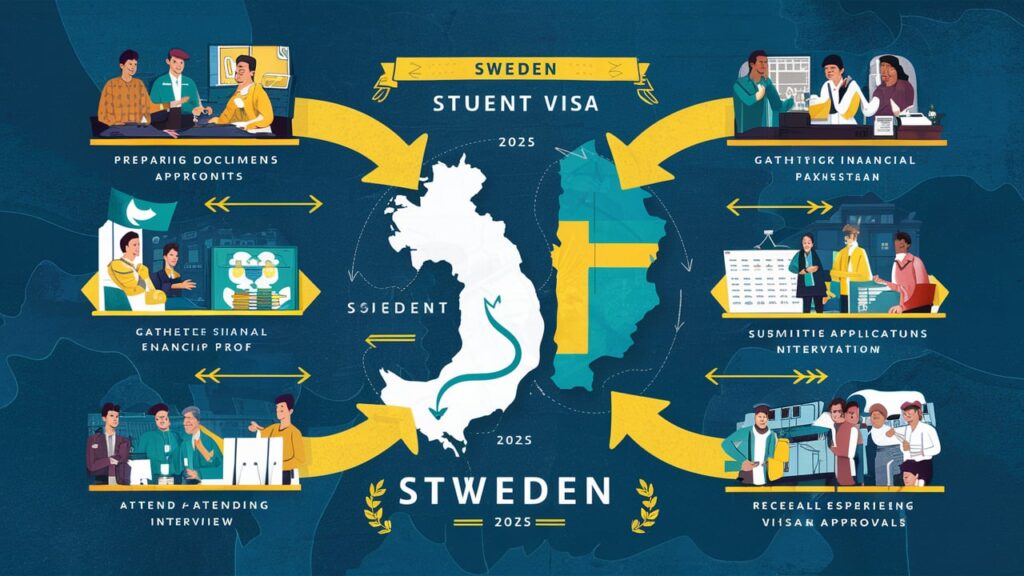
Introduction Studying in Sweden has become an increasingly popular choice among Pakistani students who aspire to receive world-class education in a diverse and innovative environment. Known for its high academic standards, modern teaching methods, and focus on creativity and research, Sweden offers a learning experience that goes beyond traditional classrooms. For Pakistani students, Sweden is an ideal destination not only because of its globally ranked universities but also due to the wide range of English-taught programs, affordable tuition fees compared to other European countries, and excellent post-study opportunities. The country’s emphasis on equality, sustainability, and innovation makes it a perfect place to grow academically and personally. In this 2025 guide, we’ll walk you through the complete process of applying for a Sweden student visa from Pakistan — from eligibility requirements and required documents to the step-by-step application procedure, processing time, and useful tips for a smooth journey. Whether you’ve already received an admission offer or are just starting your study abroad planning, this guide will help you understand everything you need to successfully apply for your Sweden student visa in 2025. Why Study in Sweden? Sweden has earned a strong reputation as one of the best countries in the world for higher education. Each year, thousands of international students—including many from Pakistan—choose Sweden for its modern education system, progressive learning culture, and welcoming environment. Here’s why studying in Sweden can be one of the best decisions for your academic and professional future: 1. World-Class Education and Globally Recognized Universities Swedish universities consistently rank among the top institutions worldwide, offering degrees that are highly respected across the globe. Institutions such as Lund University, Uppsala University, and KTH Royal Institute of Technology are known for their excellence in research, innovation, and academic rigor. Graduating from a Swedish university adds significant value to your CV and opens doors to global career opportunities. 2. English-Taught Programs and an Innovative Learning Environment Almost all master’s programs and many bachelor’s programs in Sweden are taught in English, making it easy for Pakistani students to adapt. The Swedish education system encourages critical thinking, collaboration, and creativity rather than rote learning. Students are given the freedom to explore ideas, work on real-world projects, and develop problem-solving skills that prepare them for international careers. 3. Post-Study Work Opportunities and Friendly Student Policies After completing your degree, Sweden allows international students to stay and work for up to 12 months to look for employment or start their own business. The country’s student-friendly immigration policies and strong job market in sectors like IT, engineering, healthcare, and business make it an attractive option for Pakistani graduates seeking international experience. 4. High Living Standards and Rich Cultural Experience Sweden offers a safe, clean, and inclusive environment, making it one of the most comfortable places to live in Europe. From breathtaking natural landscapes to vibrant city life, international students can enjoy a balanced lifestyle. The Swedish people are known for being kind, respectful, and open-minded, which helps Pakistani students adjust easily and feel at home while studying abroad. Types of Sweden Student Visas for Pakistani Students Before applying to study in Sweden, it’s important for Pakistani students to understand which type of visa or residence permit they need. The type of visa depends on the duration of your study program and whether you’ll be staying in Sweden for a short course or a full academic degree. 1. Residence Permit for Studies (for courses longer than 3 months) If you’ve been admitted to a university program in Sweden that lasts more than three months, you must apply for a Residence Permit for Studies instead of a standard visa. This permit allows you to live in Sweden for the entire duration of your studies. To qualify, you’ll need: Once approved, this residence permit can also be extended if your studies continue beyond the initial period. It also allows part-time work while studying, helping students gain valuable international experience. 2. Short-Term Visa (for courses under 90 days) If you plan to attend a short course, seminar, or exchange program in Sweden that lasts less than 90 days, you’ll need to apply for a Short-Term Visa (Schengen Visa). This visa permits you to stay in Sweden and other Schengen countries for the course duration. To be eligible, you must show: This visa is not extendable and does not allow long-term study or employment. 3. Key Differences Between Both Category Residence Permit for Studies Short-Term Visa Duration More than 90 days Up to 90 days Purpose Long-term studies (Bachelor’s, Master’s, PhD) Short courses, seminars Work Permission Allowed (part-time) Not allowed Extension Option Yes No Application Submitted To Swedish Migration Agency Swedish Embassy or Consulate In short, if you’re planning to pursue a degree program or any course lasting longer than three months, you’ll need a Residence Permit for Studies. For short-term educational visits, a Schengen visa is the right option.
How to Balance Work, Studies, and Daily Life in Finland: A Student’s Perspective

Introduction Finland has become one of the most attractive destinations for international students, thanks to its world-class education system, innovative teaching methods, and welcoming atmosphere. Known for its high quality of life, safe environment, and unique cultural experiences, Finland offers students much more than just academic opportunities. For many international students, however, studying abroad isn’t only about attending lectures and completing assignments. It also involves managing part-time work to cover expenses, adapting to a new culture, and maintaining a healthy personal life. Striking the right balance between work, studies, and daily living can be challenging, but it is also essential for success and overall wellbeing. In this blog, I’ll share insights from a student’s perspective on how to navigate life in Finland effectively. From managing coursework to handling job responsibilities and enjoying the vibrant Finnish lifestyle, you’ll find practical tips that can help you make the most of your experience abroad. Work Opportunities for International Students One of the advantages of studying in Finland is the opportunity to gain work experience while pursuing your degree. Many international students take up part-time jobs to support their living expenses, build skills, and expand their professional networks. Part-time job options available in FinlandStudents often find work in areas such as retail, restaurants, cafes, cleaning services, and customer support. For those with specialized skills or advanced language abilities, opportunities in research, IT, or tutoring may also be available. Seasonal jobs, especially in tourism and hospitality, are another good option during holidays. Legal working hours allowed for studentsInternational students in Finland are allowed to work up to 30 hours per week on average during the academic term. However, during semester breaks or holidays, students can work full-time. It’s important to keep in mind that academic performance should remain a priority, as your student residence permit is closely tied to satisfactory progress in your studies. Tips for finding jobsFinding a job in Finland may take some effort, especially if you don’t speak Finnish or Swedish. Here are a few ways to increase your chances: Balancing a job with your studies can be challenging at first, but with the right approach, it can enhance your experience and help you integrate into Finnish society.
Turkey Scholarships 2025 for Pakistani Students: Eligibility and Process
Introduction Turkey has become one of the most attractive study destinations for international students, especially from Pakistan. Known for its world-class universities, rich cultural heritage, and affordable living costs, Turkey offers a unique blend of modern education and traditional values. Each year, thousands of Pakistani students choose Turkey to pursue higher education because of its globally recognized degrees and welcoming environment. For many students, financing higher studies abroad can be a challenge. This is where Turkey Scholarships 2025 come as a golden opportunity. Funded by the Turkish government, these scholarships are designed to support talented international students, including Pakistanis, by covering tuition fees, accommodation, health insurance, and even monthly stipends. In this guide, you will learn everything you need to know about Turkey Scholarships 2025—from eligibility requirements and required documents to the step-by-step application process. Whether you are planning for an undergraduate, master’s, or PhD program, this article will help you prepare and maximize your chances of securing a scholarship in Turkey. Why Choose Turkey for Higher Education? When it comes to studying abroad, Turkey stands out as a top choice for Pakistani students. The country offers not only a strong academic foundation but also an enriching cultural and social experience. Here are some key reasons why Turkey is an excellent destination for higher education: 1. Quality of Education and International Recognition Turkey is home to many prestigious universities that are recognized globally for their high academic standards and advanced research facilities. Several Turkish universities are ranked among the top in the world, ensuring that degrees earned here carry international credibility. This means Pakistani students graduating from Turkish institutions have better career prospects, both locally and abroad. 2. Affordable Living and Cultural Similarities with Pakistan Compared to other popular study destinations, Turkey offers an affordable lifestyle. Tuition fees are relatively low, and living expenses such as food, transport, and accommodation are budget-friendly for international students. Additionally, Pakistan and Turkey share cultural, historical, and religious ties, which makes it easier for Pakistani students to adjust and feel at home in a welcoming environment. 3. Wide Range of Programs Taught in English and Turkish Turkish universities offer a wide variety of degree courses in engineering, medicine, business, social sciences, and arts. Most universities provide English programs, making them accessible to Pakistani students who may not speak Turkish. Learning Turkish also opens additional opportunities and enriches the study experience. Overview of Turkey Scholarships 2025 The Turkey Scholarships (Türkiye Bursları) program is a fully funded initiative by the Turkish government designed to attract talented international students to pursue higher education in Turkey. Every year, thousands of students from over 160 countries apply, and Pakistani students make up a significant portion of the applicants due to the program’s generous benefits. Types of Scholarships Available Turkey Scholarships 2025 will be offered across multiple academic levels: Benefits of Turkey Scholarships One of the biggest attractions of the Turkey Scholarships is that they are fully funded, covering almost every major expense a student may have while studying abroad. The benefits include: This comprehensive support makes studying in Turkey a financially stress-free experience, allowing students to focus entirely on their education and personal growth. Eligibility Criteria for Pakistani Students Before applying for the Turkey Scholarships 2025, Pakistani students must ensure they meet the required eligibility conditions. These criteria vary based on the level of study but generally include academic, age, and other requirements. 1. Academic Requirements 2. Age Limits 3. Language Requirements 4. Other Key Requirements Meeting these eligibility requirements is the first step to successfully applying for the Turkey Scholarships.