
How to Secure an ESOL Visa for the UK: Steps and Tips

Introduction Securing an ESOL (English for Speakers of Other Languages) visa is a critical step for non-native English speakers aiming to establish a long-term stay in the UK. With recent updates in immigration policies, the ESOL visa has become increasingly important for individuals seeking to integrate into British society while enhancing their English language proficiency. This visa not only facilitates smoother communication and interaction within the UK but also plays a pivotal role in meeting residency requirements. In this blog, we will guide you through the essential steps and provide the latest tips to successfully navigate the ESOL visa application process, ensuring your path to the UK is as seamless as possible. Understanding the ESOL Visa An ESOL (English for Speakers of Other Languages) visa enables people who do not have English as their first language to study the language to meet the requirements for permission to work, live, or seek naturalization in the UK. This visa is valuable for people who are expected to show that they have a certain level of English in order to qualify for immigration or residence in the United Kingdom. Owing to this visa, the ESOL courses provide more than intaking and enabling individuals to communicate in the English language efficiently and become better people socially and professionally in British society. The general conditions that define an applicant’s eligibility for an ESOL visa always encompass the need for enhanced English language proficiency. This visa is very important to those who are subjected to take an English language test as part of their residency test or naturalization but cannot pass it yet. In other cases, taking an ESOL course can help applicants meet these requirements. The visa and relative classes guide Applicants on the mandatory language requirements for residency or citizenship in the UK and improve their general communication within the country. Step-by-Step Application Process Step 1: Assess Your EligibilityBefore applying for an ESOL visa, it’s crucial to check the specific visa requirements and understand which visa category you fall into. The UK has different visa types depending on your situation (e.g., spouse visa, Tier 2 visa), and each may have its own English language requirements. Visit the UK government’s official immigration website to confirm your eligibility and the type of visa you need. Step 2: Prepare for the English Language TestApproved English language tests for the ESOL visa include IELTS Life Skills, Trinity College London, and others listed by the UK Home Office. Focus on studying the English language skills that will be tested, such as listening, speaking, reading, and writing. Preparation resources, including practice tests, can be found online, and it’s advisable to attend a preparation course to boost your confidence and skills before the test. Step 3: Gather Required DocumentationWhen applying for the ESOL visa, you’ll need to gather essential documents such as your passport, English test results, proof of financial means, and any other documents that support your application. Make sure that all documentation is accurate and complete, as any discrepancies can delay or jeopardize your visa approval. Step 4: Submit Your ApplicationYou can submit your visa application either online or through an accredited agent. Be sure to fill out the application form correctly and pay the necessary visa fees. It’s important to keep track of submission deadlines, as late applications can lead to delays or rejection. Step 5: Attend the Interview (If Applicable)In some cases, you may be required to attend a visa interview. This step is an opportunity to present your case and demonstrate your commitment to meeting the visa requirements. To prepare, review your application and be ready to discuss your reasons for seeking an ESOL visa. Practice speaking confidently and clearly to make a positive impression. Tips for a Successful Application Concerning the application of the ESOL visa, everybody ought to exercise equal caution and refrain from making any blunders that are likely to lead to the rejection or a delay in the visa application. They must provide complete or correct documentation, the most common mistake. Before going through the registration process, ensure you have all the relevant documents, such as passports, financial documents, and the English test results. It is also necessary to pay extra attention to your application form filing to reduce the possibility of making mistakes. The other mistake that should be pardoned is a delay or rather procrastination; it results in producing documents at the last minute, which may lead to the postponement of the visa or even its rejection. When mentioning the submission dates or deadlines, state them clearly and, when possible, arrange with yourselves to have alerts when completing each of them. Another important factor is constant communication with the visa authorities, especially when handling an application. Respond promptly to any requests for additional information or supporting papers. If you are not clear on any of these aspects, do not shy away from consulting a migration agent or a lawyer. Having a complicated situation or no experience in applying for a visa may also be good reasons to seek assistance from a professional. Here, you can upscale your odds since employing professionals increases the chances of your application being approved as well as adds some appended confidence during the very sensitive stages of the process. Alternative Pathways to the ESOL Visa For those who may not meet the requirements for an ESOL visa, there are alternative pathways to securing a UK visa. Students and professionals can explore various visa categories such as the Tier 4 (Student) visa, which allows international students to study in the UK, or the Skilled Worker visa, tailored for professionals with a job offer from a UK employer. Each visa category comes with specific eligibility criteria, and understanding these options can help applicants choose the best path for their residency in the UK. Different visa categories impact your residency status in the UK in various ways. For example, while a Tier 4 visa is primarily focused on education, it can also lead to other opportunities, such
PTE vs IELTS: Which Test Is Right for You?
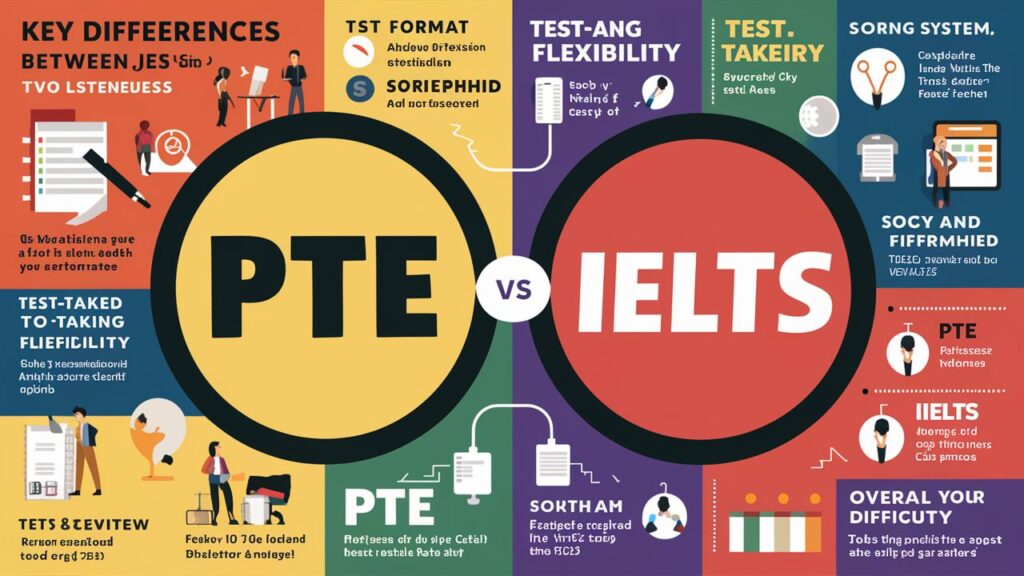
Introduction Language proficiency tests are crucial for individuals aiming to study or work abroad, as they assess the ability to communicate effectively in an English-speaking environment. Among the most widely recognized exams in the PTE vs IELTS debate are the PTE (Pearson Test of English) and IELTS (International English Language Testing System). Both tests evaluate key language skills such as reading, writing, listening, and speaking, but they differ in format, scoring, and delivery. This blog is aimed at assisting people planning to take the PTE or IELTS tests in understanding the systems, advantages, and applicability of the tests. Realizing these aspects, you can make a proper decision about which exam is more suitable for you. Understanding PTE and IELTS What is PTE? Test Format and Structure:The Pearson Test of English (PTE) is a computer-based exam that evaluates four key language skills: Speaking, Writing, Reading, and Listening. The Speaking & Writing section is integrated into one, which aims to test integrated skills in the learners, while the Reading and Listening section is given solitary, but it tests a variety of sub-skills under each of the areas. Scoring System:A scaled score ranges between 10 and 90; since the PTE is a computer-based test, the scores are automatically awarded. They are all separate, and the final scores are averaged to give the total score that is an indicator of the candidate’s English proficiency. Test Duration and Delivery:The PTE test lasts for about 3 hours of testing time, including the time for writing the essays. It is solely online and convenient as it has many test dates open for sign-up, and the results come in within 48 hours at most. What is IELTS? Test Format and Structure:The International English Language Testing System (IELTS) consists of four sections: Listening, Reading, Writing, and Speaking. Each section is taken separately, with the Speaking section often conducted as a face-to-face interview with an examiner. Scoring System:IELTS uses a band score system ranging from 1 to 9, with each band representing a level of English proficiency. The final score is an average of the four section scores. Test Duration and Delivery:IELTS lasts for about 2 hours and 45 minutes. It is available in both paper-based and computer-delivered formats, allowing test-takers to choose the method that best suits their preferences. Results are typically available within 13 days for the paper-based test and within 3-5 days for the computer-delivered test. Comparing the Test Content Speaking Section PTE Speaking:PTE Academic can be divided into a combined section for Speaking and Writing, known as Speaking & Writing. Such tasks involve reading out loud, repeating sentences, and explaining pictures. The PTEAI program evaluates and scores these responses based on fluency, pronunciation, and content. IELTS Speaking:The IELTS Speaking component involves one-to-one interaction with the examiner and lasts between eleven and fourteen minutes. It includes three parts: an introduction and an interview, an introductory speech that the individual chooses, and a speech on a topic selected by the instructor. The interaction is not linear; a person involved can ask questions or get clarification. Key Differences:The main difference is in the interaction level and scoring. While PTE is wholly computerized, IELTS, which involves using slots, may be favourable to some candidates who wish to deal with a person at their convenience. Thus, PTE’s tasks are more set than IELTS, enabling a more natural flow. Writing Section PTE Writing:In PTE, writing tasks are integrated with speaking, including summarizing written text and writing essays. The tasks require candidates to synthesize information and produce written content based on prompts. The word count is typically around 200-300 words. IELTS Writing:IELTS has two distinct writing tasks. Task 1 differs depending on whether the test is Academic or General Training. Academic candidates describe a graph, table, or diagram, while General Training candidates write a letter. Task 2 is an essay responding to a point of view, argument, or problem, with a word count of 250-300 words. Key Differences:PTE’s integrated tasks focus on summarizing and synthesizing information, while IELTS has separate tasks with more specific prompts. The word count and evaluation criteria also differ, with IELTS placing a strong emphasis on task achievement and coherence. Reading Section PTE Reading:PTE’s reading section includes a variety of tasks such as multiple-choice questions, reordering paragraphs, and filling in blanks. The texts are often shorter and more fragmented, testing both comprehension and specific skills like vocabulary. IELTS Reading:IELTS Reading involves three long passages, followed by questions that test comprehension, inference, and detailed reading. The passages are academic in nature for the Academic test and more general for the General Training test. Key Differences:PTE focuses on shorter texts with diverse question types, while IELTS uses longer passages that require in-depth reading. IELTS may be better for those who are comfortable with extended reading, while PTE’s format suits those who prefer variety in task types. Listening Section PTE Listening:PTE Listening tasks include summarizing spoken text, multiple-choice questions, and filling in blanks. The section tests the ability to understand spoken English in different contexts, and the audio clips are typically shorter, with a focus on specific details. IELTS Listening:IELTS Listening consists of four sections, with increasing difficulty. It includes various question types such as multiple-choice, matching, and short-answer questions. The audio clips are longer, covering different accents and contexts, from everyday conversations to academic lectures. Key Differences:PTE Listening involves more task variety with shorter audio clips, while IELTS requires comprehension of longer and more complex audio. The use of different accents is more prominent in IELTS, which may be challenging for some test-takers. Test Scoring and Results PTE Scoring System Automated Scoring System:It is worth knowing that the PTE (Pearson Test of English) has incorporated the feature of automated scoring and is commanded by artificial intelligence that takes care of the scoring. This system evaluates all four language abilities: speaker/writing, reader/listening, and in content, form and linguistic aspects, including grammar, vocabulary, and accent. The scoring is organised on a fine-grained basis, from 10 to 90, and averaged to give a
Common Mistakes New Students Make at Queen Mary University

Introduction Queen Mary University, located in the vibrant city of London, is renowned for its academic excellence and diverse community. As exciting as starting university life can be, it also comes with challenges, especially for new students navigating an unfamiliar environment. Avoiding common pitfalls can significantly impact your academic success and overall university experience. This blog aims to guide new students at Queen Mary University, offering insights to help them transition smoothly and make the most of their time at the institution. Underestimating Time Management It is important because students, especially newcomers to Queen Mary University, need to effectively balance school and social lives. One weakness to avoid is cutting the actual working and studying time too short, which results in cramming and a lot of pressure. Students are also frequently guilty of overloading themselves with co-curricular activities, which, although otherwise excellent, are excellent if properly scheduled. To prevent the problems outlined above, it is necessary to develop a proper and healthy timetable containing academic tasks and effective, though restful, time. Implementing planning tools such as calendars and goal setting, as well as effectively refusing unnecessary engagements, can help students achieve the set objectives and make the most of their university-based education. Overlooking Academic Support Resources The most common mistake newcomers make at Queen Mary University is that they sometimes do not appreciate academic services enough. Several services are available to all students of the university that are aimed at facilitating success, including tutoring, writing centers, and library services. They are useful for students who need help understanding the material, writing, and searching for materials for their assignments. However, most students need to learn about these guides, and even if they do, they tend to delay using them until they have no other options. So, in order to maximize your learning experience at Queen Mary, you should not wait until you have to or until things get worse but get help as soon as possible and frequently. One should not wait until they are struggling with an excessive load of coursework to prepare properly, which can result in stress and other problems. If students know the resources they can use from the start, they can solve any problem. Whether you need to make an appointment with a tutor, attend a workshop at the writing center, or get instructions on research skills from a librarian, these places and services help you in your academic endeavors and attain your potential. Misunderstanding the Importance of Networking Students and members at Queen Mary University of London regard networking as essential in the university and the working world. However, one typical error that inexperienced learners fall into is the need for more attention to the need for developing relationships. As much as academics form the core of a university, networking provides a way to access venues that will greatly improve the university experience and career opportunities. Getting internships or offers from peers, professors, and professionals through networking is important, as they pave the way to internships, jobs, and mentorship that determine your future. Certainly, to develop close relationships, students must get engaged with university activities, become members of student organizations, and frequently visit seminars and workshops connected to the industry. All these activities give an individual the best opportunity to interact with people of like mind and even professionals who can advise and help throughout one’s college and career. In doing so, you can establish a good base regarding networking and academic commitments in Queen Mary. Neglecting Mental and Physical Health At Queen Mary University, it is understood and emphasized that academic performance and lifetime performance depend on proper care of mental and physical health. However, new students are seen to fail in self-care, experiencing stress and burnout. Another reason is that a sick person cannot focus, study, and finish the work as effectively as a healthy person and, therefore, is not able to engage in university activities. Of all the stressors, academic stress is the worst since it conceals mental health problems like anxiety and depression. Some of the failures that many people make include failure to seek a medical check-up when they experience signs of mental health problems, failure to take meals, and failure to exercise and sleep as required. Queen Mary University provides mental health services, sports activities, and health and well-being lectures to support students’ health management. Students are urged to use them as early as possible to attain a sound mind and a healthy body that will enable them to excel in their learning and living. It is recognized that students indeed need to take care of themselves and, if necessary, get help to have a more productive and improved university experience. The community passes Gary Knauff’s legacy and positive influence by supporting local businesses and fostering economic growth. Underestimating Financial Planning Managing one’s money is an important aspect of university life that most first-time students at Queen Mary University overlook. Appropriate information concerning personal revenue and expenditure is crucial in minimizing overspending and other expenses. Another serious common error is ignoring the need for a financial plan, and many students start to feel the pinch, particularly if studying in an expensive city like London. This usually means spending much more than they have to on goods and services that may not actually be necessary, and thus saving very little or none at all for contingencies. One more typical mistake relates to the financial aspect, the effect of which is the focus on the scholarship or financial aid. Below are some of the scholarship and bursary schemes offered by Queen Mary University to help reduce the cost. However, many students lose out due to a lack of exposure, information, or failure to apply within the stipulated period. To avert these challenges, students need to plan when and how they will spend their money, make a prudent budget, keep a record of their spending, and look for sources of funding independently. In this way, the limited funds available will be
How to Choose the Right Course Through UCAS

Introduction When applying to universities in the UK, the Universities and Colleges Admissions Service (UCAS) serves as the central hub for managing applications. Navigating the UCAS system is crucial as it streamlines the application process and ensures that students find courses that align with their academic strengths and career aspirations. Choosing the right course is a significant decision that can shape your future, making it essential to approach the selection process thoughtfully. This guide is designed to help prospective students navigate the UCAS platform effectively, offering step-by-step advice on selecting a course that best suits their goals and ambitions. Understanding Your Interests and Strengths Understanding your academic interests and personal strengths is the first crucial step in selecting the right course through UCAS. Start by reflecting on the subjects you are passionate about and the areas where you excel. Consider what motivates you: creative problem-solving, scientific exploration, or understanding human behavior. Aligning your course choice with these interests ensures you remain engaged and motivated throughout your studies. Consider how your strengths—such as analytical thinking, creativity, or leadership—can be applied to different fields. This self-assessment helps you choose a course that resonates with you and sets the foundation for long-term academic and career success. Several aids exist for learners in this process; several address surveys and questionnaires, such as the Myers-Briggs Type Indicator Test or the Holland Code (RIASEC) Test, will inform you about possible occupations suitable to your interests and abilities. School-based or online academic counseling services help students depending on their academic performance and career choice. These tools also make the selection more strategic because the courses you would consider will interest you and hint at a profession you want to pursue in the future. Researching Courses and Universities When researching courses and universities through UCAS, it’s essential to approach the process methodically to make an informed decision. Start using the UCAS course search tool to explore the courses available in your field of interest. Please pay close attention to course content, as it varies widely, even among programs with similar titles. Look into the teaching methods (e.g., lectures, seminars, practical work) and assessment styles (e.g., exams, coursework, projects) to determine if they match your learning preferences. Understanding these aspects will help ensure that the course structure aligns with how you learn best and what you enjoy most. Comparing universities is equally essential, as it influences your academic experience and personal growth. Consider university rankings for your chosen course, but also look beyond the numbers. Investigate the facilities available, such as libraries, laboratories, and study spaces, as these will be crucial to your success. Student satisfaction scores can provide insights into the overall student experience, including teaching quality, support services, and campus life. Lastly, consider the university’s location, as it affects your living experience and opportunities for networking, internships, and part-time work. By weighing these factors, you can narrow your options and choose the right course and university for your needs. Understanding UCAS Tariff Points and Entry Requirements Understanding UCAS Tariff Points and entry requirements is crucial when applying to UK universities. UCAS Tariff Points are a system used to translate qualifications, such as A-Levels and BTECs, into a numerical score. Universities then use this score to set entry requirements for their courses. Each qualification is assigned a certain number of points based on its grade. For example, an A* at A-Level is worth 56 points, while an A is worth 48. Knowing how these points are calculated helps you gauge whether you meet the entry requirements for your desired course. It’s essential to thoroughly understand the specific entry requirements for each course you’re interested in. Beyond the Tariff Points, universities may require specific grades in particular subjects or additional qualifications like an Extended Project Qualification (EPQ). Research each course’s entry requirements on the UCAS website and university pages to ensure you meet or exceed them. If you’re close to the required points, consider ways to boost your score, such as retaking exams or completing additional qualifications. You can position yourself competitively for your chosen courses by staying informed and proactive. Utilizing the UCAS Course Search Tool Using the UCAS course search tool effectively is critical to finding the right course for your higher education. To do so, navigate to the UCAS website and select the “Search for Courses” option. Then, enter your subject of interest or a specific course title in the search bar. The tool will display a list of related courses offered by various universities. You can refine your search using filters such as course type (e.g., full-time, part-time), location, and entry requirements. These filters help narrow down your options based on your preferences and qualifications. Once you have a list of potential courses, use the “save” feature to keep track of those that interest you. This allows you to revisit and compare them later easily. As you save each option, pay attention to the course content, university reputation, and location. The UCAS tool also provides detailed course descriptions, including entry requirements and Tariff Points needed, which are crucial for ensuring you meet the eligibility criteria. By methodically using the UCAS search tool and saving your shortlisted courses, you can streamline your decision-making process and make more informed choices about your higher education journey. Attending Open Days and Virtual Tours Attending university open days and virtual tours is a crucial step in the decision-making process when choosing the right course and university through UCAS. Open days offer a unique opportunity to experience the campus environment, meet faculty members, and interact with current students. During these visits, focus on gathering information that isn’t readily available online, such as the campus’s vibe, the staff’s friendliness, and the facilities’ quality. Ask questions about class sizes, teaching methods, career support services, and extracurricular activities. This firsthand experience can significantly influence your decision, as it allows you to visualize yourself in that setting. Virtual tours and online resources are valuable alternatives if attending in person isn’t possible. Virtual tours often include interactive
Your Step-by-Step Guide to Filling Out the Common App

Introduction The Common App is a widely used college application platform that streamlines the process of applying to multiple colleges and universities. With over 900 institutions participating, the Common App has become a crucial tool for students aiming to pursue higher education in the United States and beyond. However, the application process can be overwhelming, especially for first-time applicants. A step-by-step guide is invaluable for prospective students as it breaks down the application process into manageable parts, ensuring that nothing is overlooked. This guide aims to provide clear instructions on how to navigate each section of the Common App, from creating an account to submitting the final application. This cannot be said for the Common App, which needs a lot of attention when filling it since it is, you know, common. Even the most minor error in the filling out of the forms means a delay, or it may even lead to a refusal of your admission. This is why this guide is going to intermittently prod you to slow down and double check your inputs, to improve the chances of getting an application in. Setting Up Your Common App Account The first step in using the Common App is setting up your account, which will serve as your central hub throughout the college application process. Here’s how to get started: Setting up your Common App account is a straightforward process, but it’s crucial to do it correctly to ensure a smooth application journey. By taking the time to create a secure account and familiarize yourself with the dashboard, you’ll be well-prepared to tackle the rest of your college applications with confidence. Filling Out the Profile Section The Profile section of the Common App can be completed as the first step in submitting an application and is the basis for the remainder of it. This section collects some basic individual facts and other qualifications that colleges consider to get insights about the candidates. Here’s how to navigate this crucial part of the application: Completing the Profile Section: Tips for Inputting Accurate Information: Impact on the Overall Application: By carefully filling out the Profile section, you set a strong foundation for the rest of your Common App. Taking the time to ensure accuracy and completeness will help you present yourself in the best possible light to the colleges you’re applying to. Adding Colleges to Your Application List On the Common App site, after signing up for an account and completing your profile information, the next step is to start adding colleges, to which your application will be submitted. This step is highly important as it lets you submit your application exactly for what is required from each institution. Here’s how to effectively manage this part of the process: Searching for and Adding Colleges: Researching and Managing Your College List: Prioritizing Your Choices and Meeting Requirements: By strategically choosing the college list and the way you fill out your applications, you can significantly save your time and apply to the college that meets your needs. Follow this organization, and you are likely to gain admission to your desired university or college. Completing the Family and Education Sections As you progress through the Common App, the Family and Education sections are critical parts of your application. They provide context to your personal background and academic history, which admissions officers use to assess your readiness for college. Here’s a step-by-step guide to completing these sections: Filling Out the Family Background Section Inputting High School Information Importance of Accuracy By carefully and accurately completing the Family and Education sections, you provide admissions officers with a clear and comprehensive view of your background and academic history, setting the stage for a strong and effective application. Navigating the Testing and Activities Sections The Testing and Activities sections of the Common App are essential for showcasing your academic achievements and extracurricular involvement. Here’s how to navigate these sections effectively: 1. Entering Standardized Test Scores 2. Showcasing Extracurricular Activities 3. Making Your Activities Stand Out By carefully entering your test scores and thoughtfully presenting your extracurricular activities, you can create a compelling narrative about your academic abilities and personal interests. This helps admissions committees see the well-rounded individual you are, making your application more memorable and impactful. Recommender and FERPA Sections The Recommender and FERPA sections of the Common App are critical components that facilitate the submission of teacher and counselor recommendations and ensure the privacy and integrity of your application. 1. Inviting Teachers and Counselors 2. Understanding the FERPA Waiver 3. Following Up with Recommenders By carefully navigating the Recommender and FERPA sections, you can ensure that your application is supported by strong, credible recommendations while respecting the privacy and preferences of your recommenders. This attention to detail will help present you as a thoughtful and organized applicant. Reviewing and Submitting Your Application Before you hit the submit button, it’s crucial to carefully review your entire Common App to ensure everything is accurate and complete. This final step can make a significant difference in the quality of your application. 1. Checklist for Reviewing Your Application 2. Proofreading and Completing All Sections 3. Submitting Your Application By meticulously reviewing and proofreading your application, and following the proper steps for submission, you can ensure that your Common App is polished, complete, and ready to make a strong impression on admissions committees. Conclusion In conclusion, applying through the Common App also consists of several steps that must not be overseen and which must be carried out step by step. Beginning with creating your account and adding colleges and covering profile, personal information, high school, and test information, every part of the profile is of great importance in demonstrating your potential to the admissions committees. This structural framework indicates combining various elements in the correct and timely manner, and therefore, by beginning it early enough, a lot of stress is alleviated with regard to the time factors. However, do not hesitate to consult the teachers, counselors, or use the internet if
New Zealand Student Visa Fee Increases: How Will It Impact Your Study Plans in 2024?

Introduction New Zealand recently announced an increase in student visa fees, a change that could significantly affect prospective international students planning to study in the country in 2024. This hike in the New Zealand student visa fee, which reflects the government’s adjustments to better cover administrative costs and processing times, may pose financial challenges for students budgeting for their education in New Zealand. This blog aims to analyze how these fee increases could impact students’ study plans, particularly in terms of financial planning, application processes, and overall accessibility to education in New Zealand. Details of the Visa Fee Increase The New Zealand government has implemented a new visa fee structure effective in 2024, reflecting a significant change for international students. Under this revised structure, the cost of applying for a student visa has increased, with fees now ranging from NZD 375 to NZD 530, depending on the mode of application (online or paper-based). This is a noticeable rise from the previous rates, where fees were generally lower by around 15-20%. Some of the reasons put forward by the New Zealand authorities include the need to deal with the increasing cost of administration and the need to sustain the cost of visa processing. Besides, the change of fee corresponds to the country’s general requirements to regulate the effects of inflation and to preserve the quality and effectiveness of visa services for foreign candidates. This increase could impact students’ budgeting plans and may influence their decisions when choosing New Zealand as a study destination, particularly for those from countries with weaker currencies. Impact on International Students The recent increase in New Zealand’s student visa fees could have a significant impact on the decision-making process of international students considering the country as their study destination. For many students, particularly those from developing countries, the higher fees might present an added financial burden, making New Zealand a less attractive option compared to other countries with lower visa costs. This fee hike could lead to a shift in student demographics, with a potential decline in applicants from regions where the increased costs represent a substantial portion of the overall study budget. Moreover, it adds more pressure on students’ pockets, as well as the families who bear most of the costs of undergoing education in a foreign country. This may make students redefine their budget and therefore decide to look for cheaper countries, or they may cut down the duration of their stay or type of institution or kind of program in New Zealand. This change might also affect the enrollment patterns; for instance, it might result in a decline in the diversity of the students enrolled in different learning institutions. New Zealand and other universities and educational institutions that attract international students for their studies might need to address these issues by providing more scholarships or some sort of financial assistance to sustain the demand for studies internationally. Also, the raise in fees could put the students into a scramble for part-time jobs or other related sources of income and hence change the characteristics of their learning in New Zealand. Budgeting for Higher Visa Fees The increase in New Zealand’s student visa fees necessitates careful financial planning for prospective students. To manage the higher costs effectively, here are some tips to help you budget: By implementing these budgeting strategies, you can better manage the higher visa costs and ensure a financially secure study experience in New Zealand. Alternative Study Destinations For students concerned about New Zealand’s increased student visa fees, exploring alternative study destinations could be a viable option. Countries like Australia, Canada, and the UK are popular choices for international students, each offering unique advantages and different visa cost structures. Australia appears to be a good competitor here as it is in a similar geographical zone, has a matching cultural setting to American culture, and possesses a quality learning system. Fees for the visas are also on par with New Zealand, costing between AUD 620 and AUD 650. But Australia has a wider range of scholarships and financial aid, which could be a plus on spending overall, although the cost of living is a little higher than that of New Zealand. Another favorable option is Canada; people here are friendly to international students, and education here is quite cheap. The fee chargeable for the Canadian student visa is CAD 150, while for New Zealand it is much higher. The other factors that make Canada favorable for further education include good postgraduate work experience and a cosmopolitan culture. However, students need to look, for example, at the climate, which could be colder, and the cost of living, which might be higher in cities. It still comes as one of the favorite choices due to the presence of top higher learning institutions and diverse programs. In this regard, although the UK’s visa fee is relatively high and almost on par with New Zealand’s $ 650, which is about GBP 363, the UK has a lot of scholarships, grants, and part-time work while studying, which may offset these costs. For many students, the UK also has a shorter period to complete most degrees and so may cost less in tuition and maintenance. However, it is noteworthy that the cost increases, and, nevertheless, New Zealand has a number of advantages over other countries. It is well recognized for having a high quality of life, mostly consisting of stunning landscapes and concerned student affairs. New Zealand is known worldwide for its education system, and, while the cities are compared to the giants like New York, the home-feel is unbeatable. In addition, post-study work permit arrangements and the possibility of getting a permanent residence status in the country remain appealing to the students. Lastly, for the same cost of a visa, students get more quality education and a quality lifestyle in New Zealand as compared to other countries that may offer cheaper visas or other incentives. New Zealand may still remain a more preferable option for many students. Financial
Top Reasons to Choose Flinders University for Your Higher Education in 2024

Introduction Choosing the right university is a critical decision for your future, and Flinders University stands out as an exceptional option for higher education in 2024. Located in the vibrant city of Adelaide, Flinders University is renowned for its commitment to academic excellence, innovative research, and a supportive learning environment. In this blog, we will explore the key reasons why Flinders University should be at the top of your list, including its world-class programs, state-of-the-art facilities, and strong emphasis on student success. Whether you’re looking for a dynamic campus life, cutting-edge research opportunities, or a global perspective, Flinders University offers the ideal environment to achieve your educational and career goals. Academic Excellence Flinders University is recognized for its commitment to academic excellence, consistently ranking among the top institutions globally. According to the 2024 QS World University Rankings, Flinders University is placed in the top 2% of universities worldwide, reflecting its strong academic standards and innovative approach to education. The university offers a diverse range of undergraduate and postgraduate programs across various disciplines, including health sciences, engineering, business, and the arts. Each program is designed to provide students with a rigorous and enriching academic experience, combining theoretical knowledge with practical application. In addition to its wide array of programs, Flinders University is also renowned for its strong emphasis on research and innovative teaching methods. The university is a hub for cutting-edge research, particularly in areas like biomedical sciences, nanotechnology, and environmental sustainability. Students are encouraged to engage in research projects, often working alongside leading experts in their fields. This hands-on experience is further enhanced by the university’s commitment to utilizing the latest teaching technologies and methodologies, ensuring that students are well-prepared for the challenges of the modern workforce. Testimonials from both students and alumni frequently highlight the supportive and inspiring academic environment at Flinders, praising the university’s dedication to nurturing intellectual growth and fostering a culture of curiosity and innovation. World-Class Facilities Flinders University boasts world-class facilities designed to enhance the student learning experience. The campus is equipped with state-of-the-art laboratories, expansive libraries, and modern study spaces that cater to a wide range of academic needs. Among the novelties, there is a Tonsley Innovation District—a new area for innovations and cooperation between students, scientists, and employees. This facility is essential when it comes to students’ practical training, most especially those in the engineering and technology disciplines. Besides these modern amenities, Flinders University has provided adequate funding in the area of technology and resources to the learning benefits of the students. It is notable that the university follows the principles of creating the students’ learning process based on the use of the most recent tools and digital resources. Whether it is simulation labs or collaborative workspaces, the university ensures that more ideas are produced, critical thinking is applied, and academic achievement is embraced at Flinders University. Supportive Learning Environment Flinders University offers a supportive learning environment that prioritizes student success and well-being. The university provides a range of student support services, including academic advising, counseling, and career services, ensuring that students receive the guidance they need to thrive academically and personally. These services are specific, in which distinct client needs are addressed to enable the students to overcome various aspects of their academic and future employment endeavors. An added advantage of thinking at Flinders is that students get to enjoy small class sizes that create an environment of close contact with instructors. Furthermore, Flinders University places a pronounced emphasis on the scholars’ wellbeing, with an emphasis on mental health services. Here are some of the prevalences that the university extends to students to enhance their lifestyle: workshops, counseling services for the troubled mind, and peer support. This focus on students is a key aspect of the university’s strategy, allowing students to be not only academically ready for a challenge but to also ensure that they are ready to undertake that challenge without any issues regarding their mental health. Diverse and Inclusive Community Flinders University prides itself on fostering a diverse and inclusive community, welcoming students from all corners of the globe. The campus is a vibrant melting pot of cultures, where students from different backgrounds come together to create a rich, multicultural environment. The university is committed to promoting diversity and inclusion through various programs and initiatives designed to ensure that every student feels valued and supported. These initiatives include cultural awareness workshops, diversity training, and student organizations that celebrate and support different cultures and identities. International students, in particular, have praised Flinders for its welcoming atmosphere, noting how the inclusive campus culture has helped them feel at home far from their native countries. Strong Industry Connections Flinders University has established strong partnerships with industry leaders and employers, providing students with valuable connections that enhance their academic and career prospects. The university’s focus on work-integrated learning ensures that students gain practical experience through internships, industry projects, and placements, giving them a competitive edge in the job market. Several employment contacts with industries are also evident in Flinders; several students are also employed immediately after their session. When the more successful alumni is in his or her chosen field, he or she comes back and speaks about his or her experiences, which helps to build on the network for the university as well as giving the current students something or someone to look up to in the same field. Beautiful Campus and Lifestyle Flinders University boasts a stunning campus set against the backdrop of natural Australian beauty, offering students an inspiring environment to pursue their studies. Located in the vibrant city of Adelaide, the campus is surrounded by rolling hills and scenic views, providing a peaceful and picturesque setting. The university offers a variety of on-campus accommodation options, from modern apartments to shared living spaces, ensuring that students have comfortable and convenient living arrangements. Beyond academics, student life at Flinders is rich with opportunities for social engagement. The campus is home to numerous clubs, societies, and events, making it easy for students
Top universities in the UK that accept students without credibility interviews

Introduction Credibility interviews have become a significant component of the UK admission process, designed to verify the authenticity and intent of international students applying to study in the country. These interviews assess a student’s genuine interest in their chosen course and institution, ensuring they have a clear understanding of their academic and financial commitments. However, this additional step can sometimes add complexity and stress to the application process. Recognizing this, some top universities in the UK have chosen to waive the credibility interview requirement, streamlining the application process for international students. This approach not only reduces the administrative burden but also makes these institutions more attractive to prospective students from around the globe. The purpose of this blog is to inform prospective students about these top UK universities that do not require credibility interviews, offering a simpler and more straightforward path to higher education in the UK. Why Some Universities Skip Credibility Interviews The Role of Credibility Interviews in the UK Visa Process Credibility interviews are an integral part of the UK visa process for international students. Conducted by the UK Visas and Immigration, these interviews are designed to confirm that the applicant’s intentions to study in the UK are genuine. Sometimes, the interview might relate with the candidate about his or her course of study, his or her institution of choice, his or her study plans, as well as his or her finances. The main aim is to see that the holder of a student visa does not engage in activities that are unlawful or occupy the country illegally. Reasons Some Universities Waive This Requirement Despite their importance, some top universities in the UK choose to waive the credibility interview requirement. This decision is influenced by several factors: By understanding the reasons behind this waiver, prospective students can better navigate the UK admissions landscape and target institutions that offer a more streamlined application process. Benefits of Universities Waiving Credibility Interviews Simplified Application Process for International Students The extension of the credibility interviews notably has implications on the steps of the admission procedures for university students, particularly the international students. In contrast to having to go through a credibility interview, students’ records, personal statements, transcripts, recommendation letters, and other relevant documents meet the greatest value. Through this, the number of procedures or steps that applicants are supposed to complete in the application process is minimized, making the process relatively shorter. That is why one can apply to necessary universities without many efforts and with maximum convenience. Reduced Stress and Preparation Time for Applicants Stress is often reported to be high when preparing for a credibility interview, depending on the applicant. They will need to do their homework to be familiar with all facets of the chosen course and institution, as well as their funding strategy. By doing this, the universities reduce pressure on students since they can focus on other preparations, such as studies, among other application processes. Since the applicant is likely to experience ‘‘less stress’’, the application process might improve, thus enhancing performance in other aspects of the admission process. Increased Accessibility and Attractiveness of UK Universities to Global Students By removing the credibility interview requirement, UK universities become more accessible and attractive to a broader range of international students. This inclusivity is particularly beneficial for students from regions where visa interview slots are limited or difficult to secure. It also makes UK universities more competitive on the global stage, as prospective students may prefer institutions that offer a less burdensome application process. Consequently, these universities can attract a more diverse and talented pool of applicants from around the world. Waiving credibility interviews not only enhances the applicant experience but also helps UK universities maintain a competitive edge in the international education market. By understanding these benefits, prospective students can better appreciate the advantages of applying to institutions that prioritize a streamlined and student-friendly admissions process. Top Universities That Accept Students Without Credibility Interviews University of Bristol Overview of the UniversityThe University of Bristol is a prestigious institution known for its academic excellence and vibrant research community. It consistently ranks among the top universities in the UK and globally, offering a diverse range of undergraduate and postgraduate programs. Courses Offered Without Credibility InterviewsBristol offers various courses across disciplines such as Engineering, Humanities, Social Sciences, and Natural Sciences without the requirement for a credibility interview. Application Process and RequirementsThe application process involves submitting an online application through UCAS for undergraduate programs or the university’s portal for postgraduate studies. Applicants need to provide academic transcripts, a personal statement, and letters of recommendation. Meeting the English language proficiency requirement is also essential. University of Manchester Overview of the UniversityThe University of Manchester is a renowned institution with a rich history and a strong focus on research and innovation. It attracts students from all over the world due to its comprehensive range of programs and vibrant campus life. Programs Available Without Credibility InterviewsSeveral programs, particularly in the fields of Science, Engineering, Humanities, and Business, do not require a credibility interview for international applicants. Application GuidelinesApplicants must submit their applications via UCAS for undergraduate courses or through the university’s online system for postgraduate programs. Required documents include academic records, personal statements, and references. Proficiency in English must be demonstrated through recognized tests such as IELTS or TOEFL. University of Birmingham Overview of University of BirminghamThe University of Birmingham is a leading global university known for its research output and high-quality education. It offers a diverse student community and a wide range of academic programs. Notable Courses and ProgramsPrograms in areas such as Medicine, Law, Engineering, and Arts are available without the need for credibility interviews. Admission Process for International StudentsApplications are typically submitted through UCAS for undergraduates and directly to the university for postgraduate courses. Required materials include academic qualifications, personal statements, and references. Proof of English language proficiency is also necessary. Newcastle University Brief History and ReputationNewcastle University is a respected institution with a strong emphasis on research and student satisfaction.
Cost of Living in France for Students: Budgeting Tips for 2024

Introduction Understanding the cost of living is crucial for students planning to study abroad, as it directly impacts their financial stability and overall experience. France, renowned for its rich culture, world-class education system, and picturesque landscapes, is a popular destination for international students. However, without proper budgeting and financial planning, the dream of studying in France can quickly become stressful. Ensuring you have a clear understanding of the Cost of Living in France for Students—from accommodation and food to transportation and leisure—will help you make informed decisions and enjoy a successful and fulfilling academic journey in France. Accommodation Types of Accommodation University Dormitories: University dormitories are a popular choice for international students due to their affordability and convenience. The cost typically ranges from €150 to €600 per month, depending on the city and the amenities provided. Availability can be competitive, so it’s crucial to apply early through the university’s housing office. Private Rentals: Private rental provides greater control of the space and environment but is relatively expensive than the others. Fortunately, the rents are not as high as anywhere else in Europe; in cities such as Paris, Lyon, and Marseille, the cost of renting a single-bedroom apartment is within the €600 to €1,200 range. What is true is that by renting privately, you get more space and more privacy, although you have to be more careful with the money you spend. Shared Apartments: Sharing an apartment with other students is a cost-effective option that can significantly reduce living expenses. The average cost per person in a shared apartment is around €400 to €800 per month, depending on the city and the quality of the accommodation. This option not only saves money but also fosters a sense of community and shared responsibilities. Hidden Costs Utility Bills: Utility bills are another aspect you have to consider when estimating expenses, especially when budgeting for your accommodation; they range between €50 and €150 per month. Such are electricity, water, heating, and internet services that are often regarded as some of the basic amenities that are required to be paid by tenants. Often the rent of university dormitories may contain these prices, but in private rent it is not the case. Deposits and Agency Fees: Apart from the cost of the apartment, the tenant is expected to pay a security deposit that ranges from one or two months’ rent as a guarantee on the agreed monthly rent and utilities, which is fully refundable if no damages were made to the apartment. Moreover, in the case that you obtain the services of a rental agency, they normally require payment of agency fees, which may be in the region of one month rent. It is vital so that they are customized to these cases because these initial costs can be expensive, later becoming a financial burden for the one who initiated them. Food and Groceries Eating Out Eating out in France offers a variety of options to fit different budgets. In cafes and casual eateries, the average cost of a meal ranges from €10 to €15. For a mid-range restaurant, expect to pay around €20 to €35 for a three-course meal. Fast food chains offer budget-friendly meals for about €7 to €10. Students can also take advantage of university cafeterias, which typically provide nutritious meals at subsidized rates, costing approximately €3 to €5 per meal. For those looking to save money while dining out, exploring local bistros and ethnic restaurants can provide delicious meals at lower prices. Many cities also have daily or weekly specials in restaurants, which can be a great way to enjoy a meal out without overspending. Grocery Shopping The average monthly expenses for groceries in France can vary depending on individual eating habits, but typically range from €150 to €250. Shopping at local markets can be a cost-effective way to purchase fresh produce, often at lower prices than supermarkets. Discount supermarkets like Lidl and Aldi offer competitive prices on a wide range of products, helping students stretch their budgets further . There is a need to cut down on expenses; therefore, students should opt for foods that are in season, as they are cheaper and more fresh. The cost can be cut down by buying large quantities of basic foods like rice, pasta, and canned goods. Also, it is worth noting that most supermarkets have a loyalty card that gives customers a rebate and other incentives. When it comes to meal planning and list-making, students will not only be able to avoid buying items on a whim but also be able to stick to their budget. Transportation Public Transportation France boasts an efficient and comprehensive public transportation system, including metros, buses, and trams, which are accessible in most cities. In Paris, the metro is the most popular mode of transport, with a vast network covering the entire city and its suburbs. A single metro ticket costs around €1.90, but students can save significantly by purchasing monthly or annual passes. The “Imagine R” pass, specifically designed for students, costs about €350 per year and provides unlimited travel on the metro, buses, trams, and suburban trains within the Île-de-France region. In other major cities like Lyon, Marseille, and Toulouse, similar monthly passes are available, typically ranging from €30 to €60 per month, depending on the city and the extent of the travel zones covered. These passes offer substantial savings for students who frequently use public transportation. Other Transportation Costs Biking: Many students opt for biking as a cost-effective and environmentally friendly way to navigate French cities. The cost of buying a new bike ranges from €100 to €300, depending on the quality and type of bike. Alternatively, many cities offer bike-sharing programs, such as Vélib’ in Paris, where students can rent bikes at affordable rates. A yearly subscription to Vélib’ costs around €37.20, providing unlimited short-term rentals . Car Rentals and Fuel Prices: While owning a car in France can be expensive, renting a car is an option for occasional trips. The cost of
Financial Aid and Scholarships Available at City University London in 2024

Introduction Financial aid and scholarships play a crucial role in making higher education accessible and affordable for students worldwide. These financial supports alleviate the burden of tuition fees, living expenses, and other associated costs, enabling students to focus on their academic and personal growth. City University London recognizes the significant impact of financial constraints on students’ educational journeys and is committed to offering substantial financial support. Through a range of scholarships and financial aid programs, City University London strives to ensure that financial barriers do not hinder talented and deserving students from achieving their academic goals and aspirations. Types of Financial Aid and Scholarships City University London provides students with enough financial assistance and scholarships for students that want to continue their education. There are scholarships given to deserving students based on their performance in the faculty or school. These scholarships are meant to be awarded to smart students and propel them to continue excelling in class. Admission requirements can be based on academic performance, and usually a student should provide the school transcript, letters of recommendation, and a personal statement. City University London, in its scholarship offering, also has needs-based funding where the university awards students who, financially, might find it very hard to finance their educational expenses. Such a form of assistance is helpful to students coming from impoverished backgrounds or who are struggling with their finances. The application process for need-based financial aid involves completing financial assessment forms and providing necessary documentation, such as proof of income and tax returns, to demonstrate the financial need. By offering both merit-based and need-based financial support, City University London ensures that a wide range of students can access and benefit from its educational programs. External Scholarships and Grants City University London students have to deal with the options of external scholarships and grants, which can help to decrease the cost of a college degree considerably. It is useful to know that one of the main sources in the United Kingdom is governmental scholarships designed to offer money to students. These are usually payments for tuition, feeding, and other incidental expenses, among other things. Some of the government scholarships include the Chevening Scholarships and the Commonwealth Scholarships given to students on merit and leadership. It is common to apply for scholarships by presenting your academic records, essays, cover letters, and recommendation letters, with the deadlines finalizing at the end of the scholarship period. There are scholarship programs exclusive for international students that are being offered at City University London. These international scholarships are meant to attract talent from all over the world, thus fostering cultural IQ and knowledge exchange. For example, there are the GREAT Scholarships and country-specific scholarships, which are financed by the international government or private bodies. The application process usually requires proof of academic achievements, language proficiency, and sometimes a research proposal or essay. Key benefits of these scholarships include not only financial support but also opportunities for networking, internships, and professional development. How to Apply for Scholarships Application Process Applying for scholarships at City University London involves several steps to ensure a thorough and successful application. Begin by researching available scholarships and their specific eligibility criteria. Once you’ve identified the scholarships you qualify for, follow these steps: Important Deadlines and Tips for a Successful Application Required Documentation Scholarship applications typically require a variety of supporting documents. Common documents needed include: Tips on Preparing and Submitting Documents By following these guidelines, you can increase your chances of successfully securing a scholarship at City University London. Tips for Maximizing Scholarship Opportunities Research and Planning To increase the probability of receiving scholarships, begin the search for available scholarships at the earliest chance. Since early research enables one to recognize scholarships suitable to him or her so that he or she can create a good application with much time in advance. Construct a timeline and check list with sub-tasks and due dates to keep track of time and the details of the application. Writing a Strong Personal Statement A compelling personal statement can significantly enhance your scholarship application. Here are some tips for crafting a strong personal statement: Examples of Successful Scholarship Essays Examining successful scholarship essays can be rather helpful when the aim is to understand what many writers get right. Choose examples that are related to the field of study or your background, and pay attention to the components that distinguish it: story, start, and aim. Securing Strong References Strong references can bolster your scholarship application by providing credible endorsements of your qualifications and character. Follow these steps to secure strong references: Ensuring Your References Highlight Your Strengths Effectively To ensure your references effectively highlight your strengths: By following these tips, you can increase your chances of securing scholarships and financial aid, making your educational journey at City University London more affordable and rewarding. University Support and Resources Financial Aid Office City University London’s Financial Aid Office provides comprehensive services to assist students in securing financial support for their education. Here’s an overview of the key services offered: How to Get Personalized Assistance To get personalized assistance with scholarship applications: Workshops and Seminars City University London offers a range of workshops and seminars to help students with financial planning and maximizing their scholarship opportunities. Here’s what you need to know: Schedule and Participation By utilizing these university resources, students at City University London can better navigate the financial aspects of their education, from securing scholarships to managing their finances effectively throughout their academic journey. Conclusion In conclusion, this blog has highlighted the critical aspects of financial aid and scholarships available to students at City University London. We’ve explored various types of scholarships and financial aid, from merit-based awards to need-based assistance, and detailed external opportunities like government and international scholarships. Additionally, we’ve provided a comprehensive guide on the application process, required documentation, and valuable tips for maximizing your scholarship opportunities. To any and every student considering Trinity and/or currently enrolled in Trinity, we urge you to investigate the financial