
Part-Time Work Rules for Students in Ireland: The 2026 Ultimate Guide
INTRODUCTION
To Pakistani students, the choice to study in Ireland can be a tactical combination of desiring to receive education of the highest quality and accessing a job market that is currently on a boom in Europe. Coupled with the green scenery and the technological advanced cities such as Dublin and Cork, Ireland has become a high-quality substitute to the old destinations such as the UK or USA. But the process of relocating to a new country is not just a matter of putting the bags in, it involves a lot of knowledge on the local regulations, particularly concerning employment and money.
This is a comprehensive overview of the part-time working regulations, the application procedure, and the cost of living in Ireland in 2026/2027 to make sure that your experience in studying in Ireland is successful and pleasant.
The stamp 2 visa permission that permits casual employment is one of the key incentives to international students. Ireland understands that students require funding and business networking, but it must not disrupt their ultimate aim, which is to graduate.
1. Legal Work Hours and the “Stamp 2” Visa
If you are coming from Pakistan to study in Ireland, you will likely be issued a Stamp 2 visa. This stamp is your gateway to the Irish workforce.
The 20/40 Rule
The Irish government has set strict but fair limits on how much an international student can work:
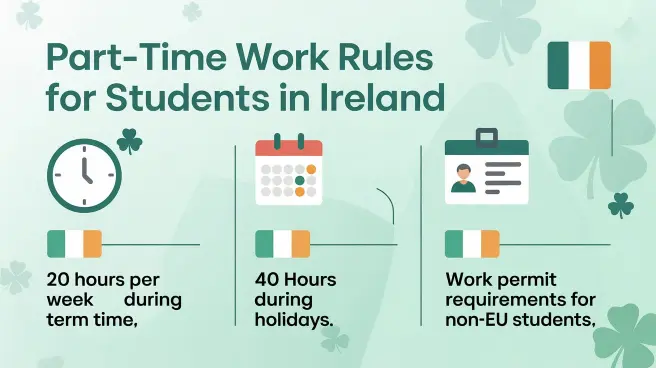
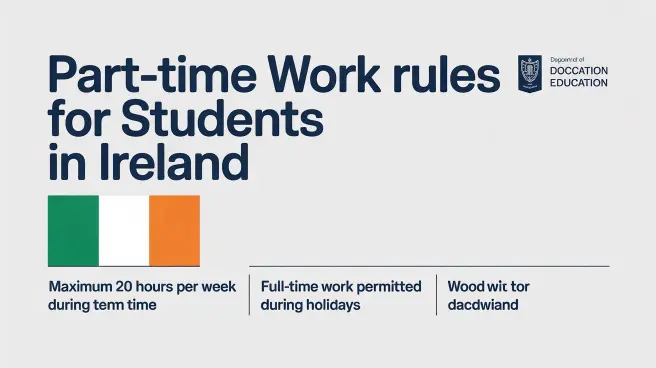
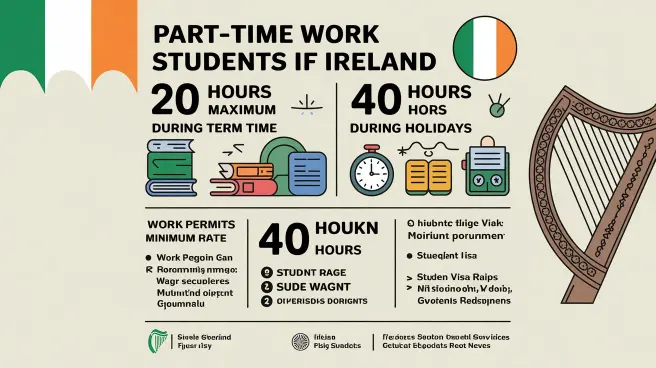
- Term Time (20 Hours): During the academic semester (typically September to May), you are permitted to work a maximum of 20 hours per week.
- Holiday Periods (40 Hours): You can work full-time, up to 40 hours per week, during specific periods:
- Summer: June 1st to September 30th.
- Winter: December 15th to January 15th.
Crucial Note: Working beyond these hours is a violation of your visa conditions and can lead to deportation. Always keep a personal log of your hours to ensure you remain compliant.
2. Essential Documents: PPS Number and Tax Registration
Securing a job is only the first step. To get paid legally, you need to navigate the Irish administrative system.
What is a PPS Number?
A Personal Public Service (PPS) number is a unique reference number used for all dealings with public bodies and employers. You cannot be paid a legal wage without one.
- How to apply: Once you have a job offer and a proof of address in Ireland, you apply via the Department of Social Protection.
- Processing time: It can take anywhere from 2 to 4 weeks, so apply as soon as you land a job.
Registering with Revenue
Once you have your PPS number, you must register your employment on the Revenue MyAccount portal. This ensures you are taxed correctly.
- Emergency Tax: If you fail to register, your employer is legally required to deduct “Emergency Tax,” which can be as high as 40% of your earnings. While you can claim this back later, it creates a significant cash-flow issue for a student.
3. Financial Rewards: Minimum Wage in 2026
Ireland offers one of the highest minimum wages in Europe, making it an economically viable choice for those who choose to study in Ireland.
As of January 1, 2026, the national minimum wage is €14.15 per hour.
Potential Earnings Breakdown
If you maximize your legal hours, here is what your earning potential looks like:
- Term Time (20 hours): €283 per week / ~€1,132 per month.
- Holiday Time (40 hours): €566 per week / ~€2,264 per month.
While this income is substantial, it should be viewed as a way to cover living expenses rather than a way to pay for your entire tuition.
4. Why Study in Ireland? The Benefits for Pakistani Students
Beyond the paycheck, there are several strategic reasons why thousands of students from Lahore, Karachi, and Islamabad choose Ireland every year.
Academic Excellence
Irish universities rank in the top 1% globally. Whether it is Trinity College Dublin or University College Dublin (UCD), the quality of research and teaching is unparalleled.
The “Silicon Valley” of Europe
Ireland is the European headquarters for global giants like Google, Apple, Meta, and Pfizer. This proximity creates a massive demand for skilled graduates, often leading to internships and high-paying jobs.
The Post-Study Work Visa (Stamp 1G)
One of the best perks for those who study in Ireland is the Graduate Scheme.
- Masters/PhD Graduates: Get a 24-month stay-back option to work full-time.
- Bachelors Graduates: Get a 12-month stay-back option.
5. Top Courses for High Employability
When choosing what to study, aligning your passion with the Irish “Critical Skills” list is a smart move.
| Industry | Popular Courses | Top Universities |
| Technology | Data Science, Cyber Security, AI | TCD, DCU, TU Dublin |
| Business | MBA, Business Analytics, Fintech | UCD Smurfit, University of Limerick |
| Healthcare | Nursing, Pharmacy, Medicine | RCSI, UCC, University of Galway |
| Engineering | Biomedical, Civil, Software Engineering | TCD, MTU, SETU |
6. Admission Requirements for 2026
Getting into an Irish university requires careful documentation. For Pakistani students, the requirements are generally as follows:
Undergraduate (Bachelors)
- Academic: 70% or above in HSSC (Intermediate) or equivalent A-Level grades.
- English: IELTS 6.0 (with no band less than 5.5) or equivalent PTE/Duolingo scores.
- Foundation Year: Many students may need a 1-year foundation program if their high school scores are slightly lower.
Postgraduate (Masters)
- Academic: A 4-year Bachelor’s degree with a minimum CGPA of 2.8/4.0 or 60%+.
- English: IELTS 6.5 (with no band less than 6.0).
- SOP & LORs: A strong Statement of Purpose and two academic/professional Letters of Recommendation are mandatory.
7. The Real Cost: Tuition Fees and Living Expenses
Planning your budget is the most important part of your pre-departure checklist.
Annual Tuition Fees
- Arts & Humanities: €10,000 – €16,000
- Business & Science: €12,000 – €20,000
- Engineering & Tech: €15,000 – €25,000
- Medicine: €35,000 – €55,000
Monthly Living Expenses
While Dublin is the most expensive city, living in Cork, Galway, or Limerick can save you significant money.
| Expense Item | Dublin (Monthly) | Other Cities (Monthly) |
| Rent (Shared) | €700 – €1,000 | €450 – €700 |
| Food/Groceries | €250 | €200 |
| Utilities/Internet | €100 | €80 |
| Transport | €50 (Student Leap Card) | €40 |
| Total | €1,100 – €1,400 | €770 – €1,020 |
8. SEO Best Practices for Finding Jobs
When you land and are ready to work, don’t just walk into shops. Use these resources to find roles that respect student work rules:
- Jobs.ie & Indeed Ireland: The most popular general job boards.
- LinkedIn: Essential for finding “Office Admin” or “Entry-level Tech” part-time roles.
- On-Campus Portals: Most universities have a “Careers Office” that lists part-time roles specifically for students (e.g., library assistant, campus ambassador).
9. Conclusion: Your Future Starts in Ireland
The opportunity to study in Ireland provides a perfect mix of high-quality education and a vibrant lifestyle. By adhering to the part-time work rules, you can not only manage your finances but also gain the local experience necessary to launch a global career.
Ireland is a country that rewards hard work and curiosity. If you manage your 20 hours of work and 40 hours of study effectively, you are setting yourself up for a future filled with possibilities.
Ready to take the leap?
If you’re feeling overwhelmed by the visa process or university selection, let the experts at Endeavours Pakistan guide you. From SOP writing to visa filing, we provide end-to-end support to ensure your Irish dream becomes a reality.
Visit ourOfficial Websitetoday to book a free consultation orContact Usdirectly to start your application for the 2026 intake!
Internal Linking Strategy:
- Learn more about our Visa Services.
- Check out other top destinations on our Study Abroad Blog.
- Read testimonials from students who successfully moved to study in Ireland via our Success Stories page.